Mike Adair
1, Choice of equipment, Rods, Reels, Fly Lines, and other useful items.
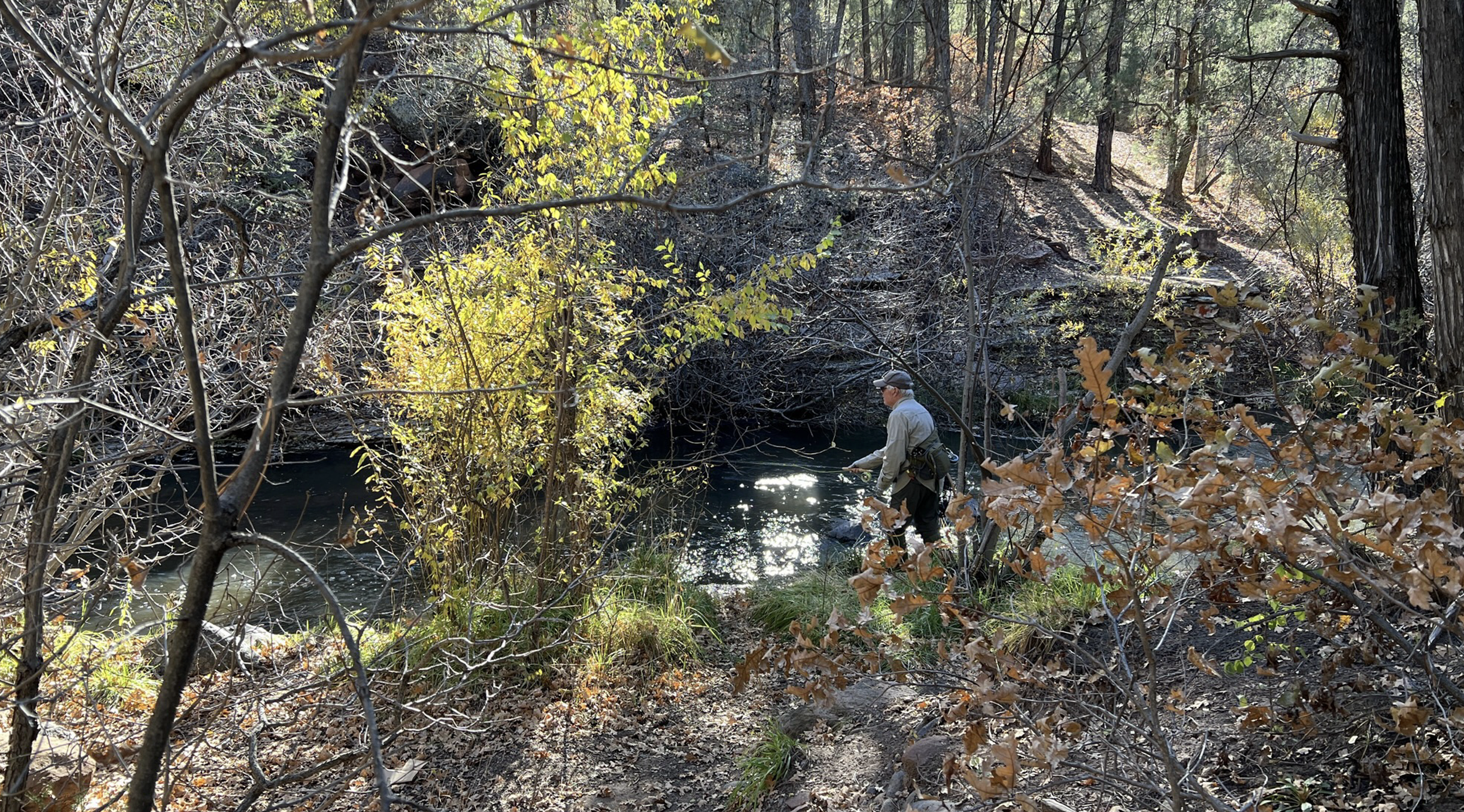
I’m a small stream fly fisher who loves wandering through mountain streams with a classic fly rod in hand. And, I’m fortunate to have some outstanding classic tackle that gives me a great deal of enjoyment when fly fishing in my southwest region of America. I’m talking about classic creek rods. There are three fly rods that I rely on more than any others in my collection. They are graphite models, and each was designed and built in Twin Bridges, Montana. Below are three creek rods that are my reliable performers when fishing a mountain Rio.
Winston WT 7' 2wt - this rod is an amazing 2wt rod (3pc), and is perfect for my mountain creeks and small streams…a very versatile model because it will handle both 2wt and 3wt fly lines, for fine-tuning how deep it loads a fly line in diverse stream environments. I rig it up with a 2wt line for the more open creeks where I have room to cast from 10 to 35 feet. And, I overline it with a 3wt line for even easier loading on those tight, canopied creeks that flow down the side of my mountains. The rod's action is progressive, smooth, and a joy to cast with each of those line weights. I consider it the best all-time 7' 2wt model designed to date. Thank you, Tom Morgan! Yes, it’s impressive. Also, a very practical rod due to its 7’ length. It’s capable of fishing anywhere on my mountain Rio’s where trout call home.
IM6 7'6" 3wt - Quite simply the best 7'6" 3wt rod ever made. Yeah, my opinion. However, it doesn't take a back seat to any contemporary rod I've ever fished. Another rod that Tom hit the 'sweet spot' for fishing in small streams. I fish a two-piece model as well as the three-piece model, and both are exceptional for light trout fly fishing. There are many anglers, still to this day, who fish the blue lines with this classic 7'6" 3wt rod, and I'm thankful to be one of them.
WT TMF 8' 4wt - So, this will come as a surprise for readers who know Winston classics. Most will say the early IM6 TMF rods are the best. However, I like the WT TMF rod model due to it being ever so slightly firmer, yet it still has that magical tip section they are famous for. It's a proven taper and a pleasure to fish. I never doubt this model as my favorite fly rod to fish, if that means anything.
Do I fish with other rod models? Of course. However, these are my top three creek rods.
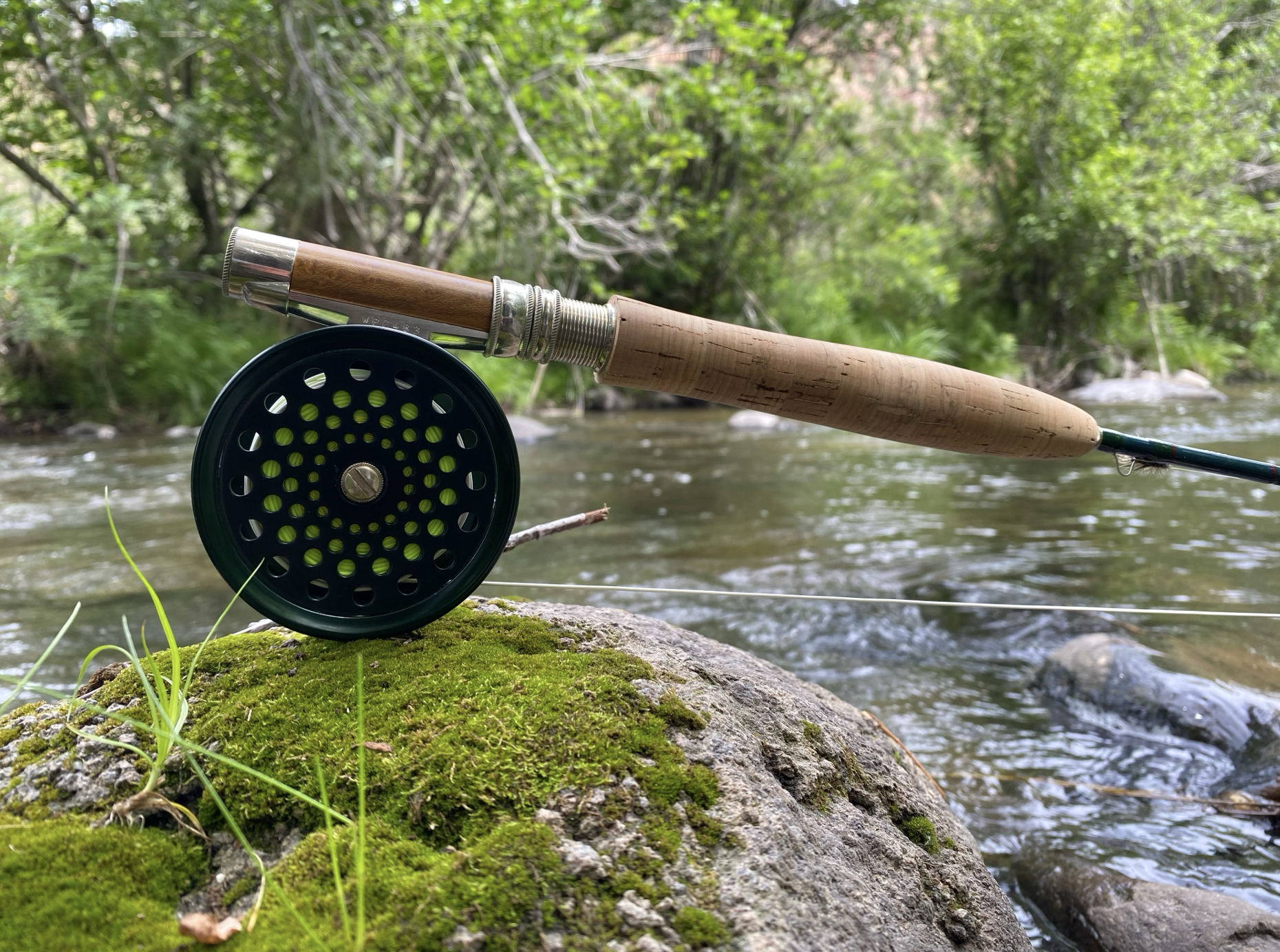
Fly Reels - In my view, fly reels play a secondary role to an angler’s fly rods and fly lines for creek fishing. However, I do catch strong trout that are surprising for their size, and I sometimes want a light drag in those feisty moments. Mostly, I lock in a click-check type of reel since they offer enough drag resistance for what I need to bring trout to the net.
Sling Pack - my small sling pack holds the usual accessories: tippet; leaders; nippers; forceps; floatant; drying patch; SPOT Messenger; and bottled water. Also, attached to the pack is a landing net in either 18 or 20-inch length, depending on the stream. There is one stream, in my regular rotation, where wading is prohibited, and I’ll use a 32-inch net there, because invariably, I'll hook a trout where water is running three feet below the bank…that’s the appropriate time to give thanks I remembered to pack the net in the truck.
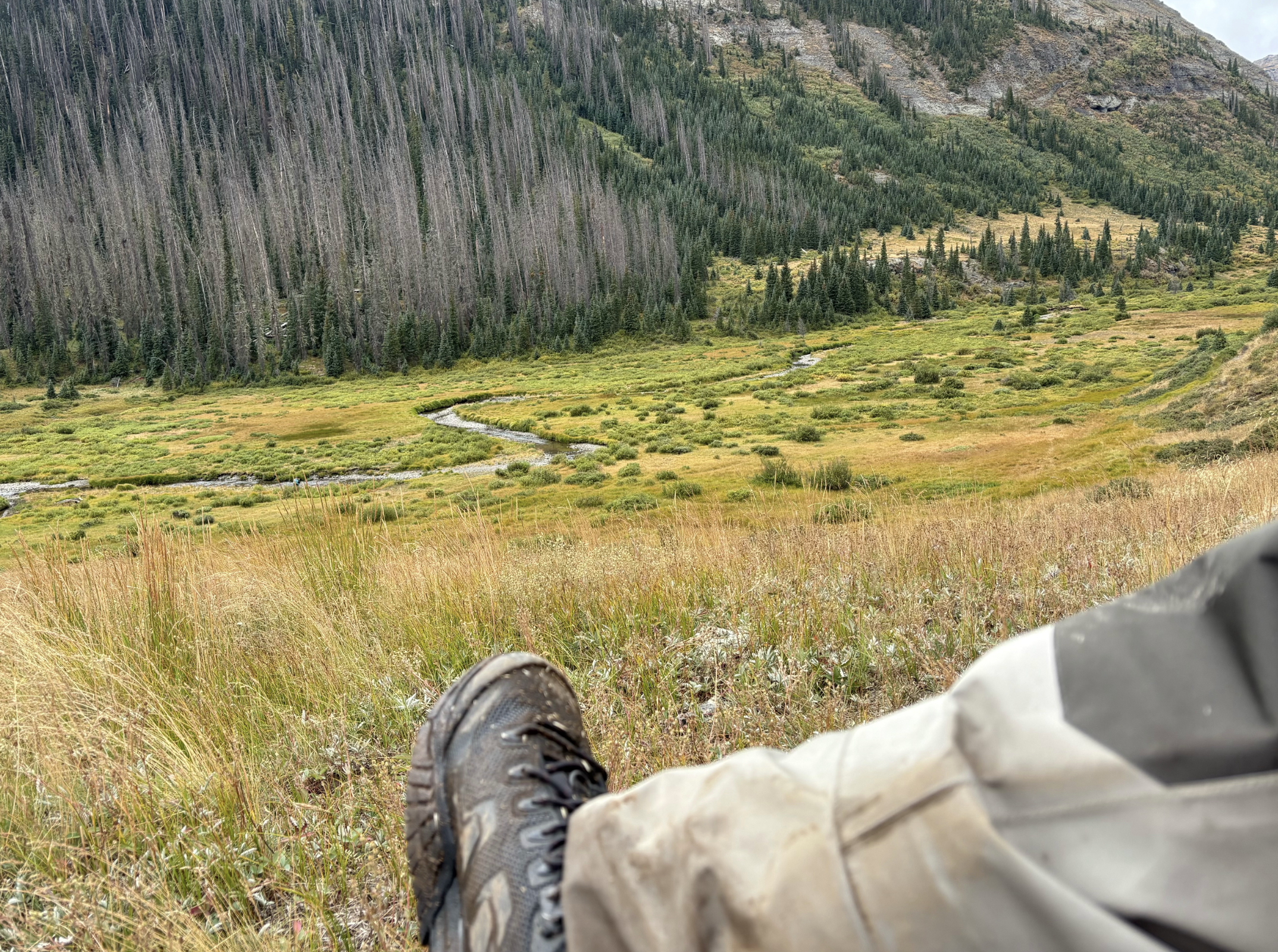
Waders - I keep in the truck the following: a pair of 15" high rubber boots; lightweight wading boots; and breathable hip waders with neoprene stocking feet. Sometimes I'll wet wade, but that's not often. Which wading method I use on a given day depends on how far I'm hiking, the depth of the stream, and how spooky the trout tend to be in a few specific streams. Nope, you don't need chest waders on most of the streams I wander into, but when I am on a larger river, I’ll slip on breathable pant waders. I haven’t used chest waders for almost ten years now.
Fly Lines– I will say right away, fly lines with long front tapers don’t work well on my home waters. Why? Those long front tapers require too much line out of the tip for the rod to flex properly...not good when you need a short cast under 15 feet. A true-to-weight fly line, head length of about 40 feet, with a front taper of 8’ or less is ideal, because I need the rod to easily load a line for short casts. Yeah, and I'll sometimes overline my 2wt rods with a WF3 line…but, I only overline my 2wt fly rods when needed. The fly lines I use most often are two premium products: Rio LightLine; and Winston Energy...both are weight-forward versions.
2, Leader Material, build-up, length and knots.
Leaders and tippets don’t last long on my tight, canopied, mountain creeks. Between the trees and stream structure, they get damaged easily. Yeah, there are lots of “willow warfare” too with getting into position for a cast to a rising trout. So, I keep this aspect of fly fishing as simple as possible, because I hate spending time tying knots! I use mostly 6’ and 7’6” tapered leaders from 7x to 5x with a perfection loop for quick leader changes when needed. I like fresh leaders and tippets, and I replace them as needed during the season. Through on-stream trials, I have found SA Absolute Trout leaders and tippets work very well.
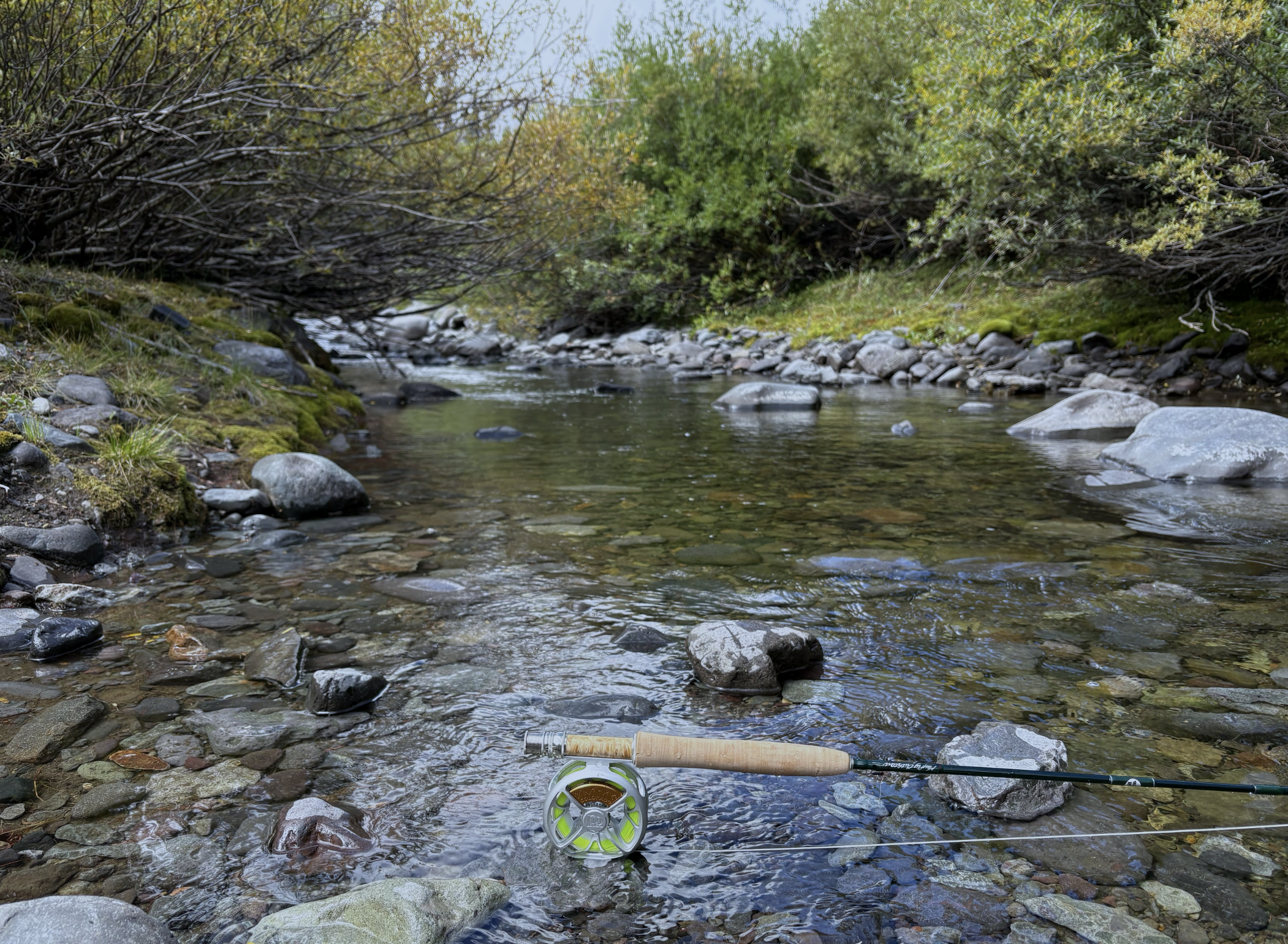
When my leader becomes too short from changing flies, or from breaking off my fly from a stream-side branch, I use a figure-eight knot to add tippet. It’s a quick-fix knot, and it has never failed me. This usually happens when I’m standing in the middle of the stream, and I want to get a fly back on the water as soon as possible. Yeah, I do take a lot of risks with casts, because my creek trout hide in places that are not easy to reach with a fly. If I’m not losing a fly now and then, I’m missing opportunities to land trout. And, then there are days I fish the same fly all day long…seems the more ragged it gets, the more trout find it irresistible.
3, Approach and Stealth.
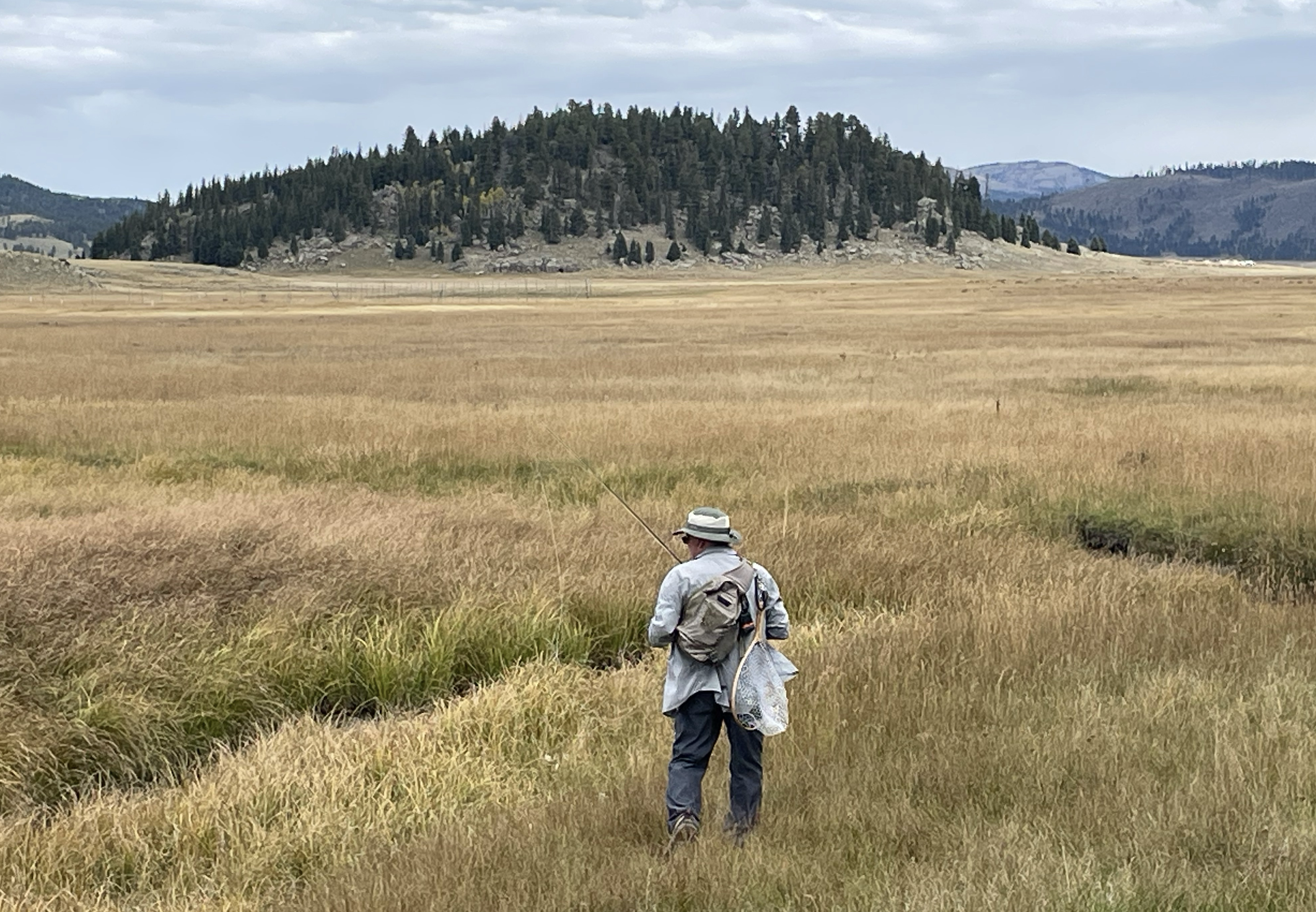
There are a few things I have in mind as I'm walking up to a stream, especially on my first approach. Most obviously, don't spook the trout! They can be spooked by the sight of you or by the vibrations of you walking over them. There are deep cuts under the stream’s bank where they hide, and they can feel your steps as you're walking above them. Instead of walking along the bank’s edge, move away from the stream to hike up or down stream, and then move in to take your cast...walk softly, and out of view of the trout. For streams with tall banks, I’ll use the grassy bank to block the trout’s view of me when casting. And, I have no hesitation to get on my knees to remain out of the trout’s view while casting, even at my golden age.
A few of my streams on Rainy Mountain cannot be waded, or you will see trout darting in all directions with your first step into the water. I only wade when necessary...many of these little Rio’s are narrow enough to cast a fly to all targets while standing on the bank. Heck, you can even jump over a few of them. Note: we have a national wildlife preserve where regulations prohibit wading for prevention of whirling disease…be sure to know the local rules before fishing any stream.
Being stealthy is also about shadows when the sky is cloudless and bright blue. That’s when the trout will be holding in the shadows that cover the stream. I invest all my time drifting my flies through the shadows on these kinds of days. I also like to walk in the shadows when approaching a stream, which keeps me from glowing like a light bulb, and alerting the trout. The trout feel safer within the shadows, and so do I.
I’ve always said be like a trout, become invisible, and use the shadows and foliage along the bank to hide the trout’s view of your presence. It’s all about being stealthy, and is an important factor for success when fly fishing mountain Rio’s. My father must have passed enough of his Cherokee DNA to me…because stealthiness while fishing is just intuitive for me. Or, maybe it’s the grey and olive clothing?
4, Reading the water.
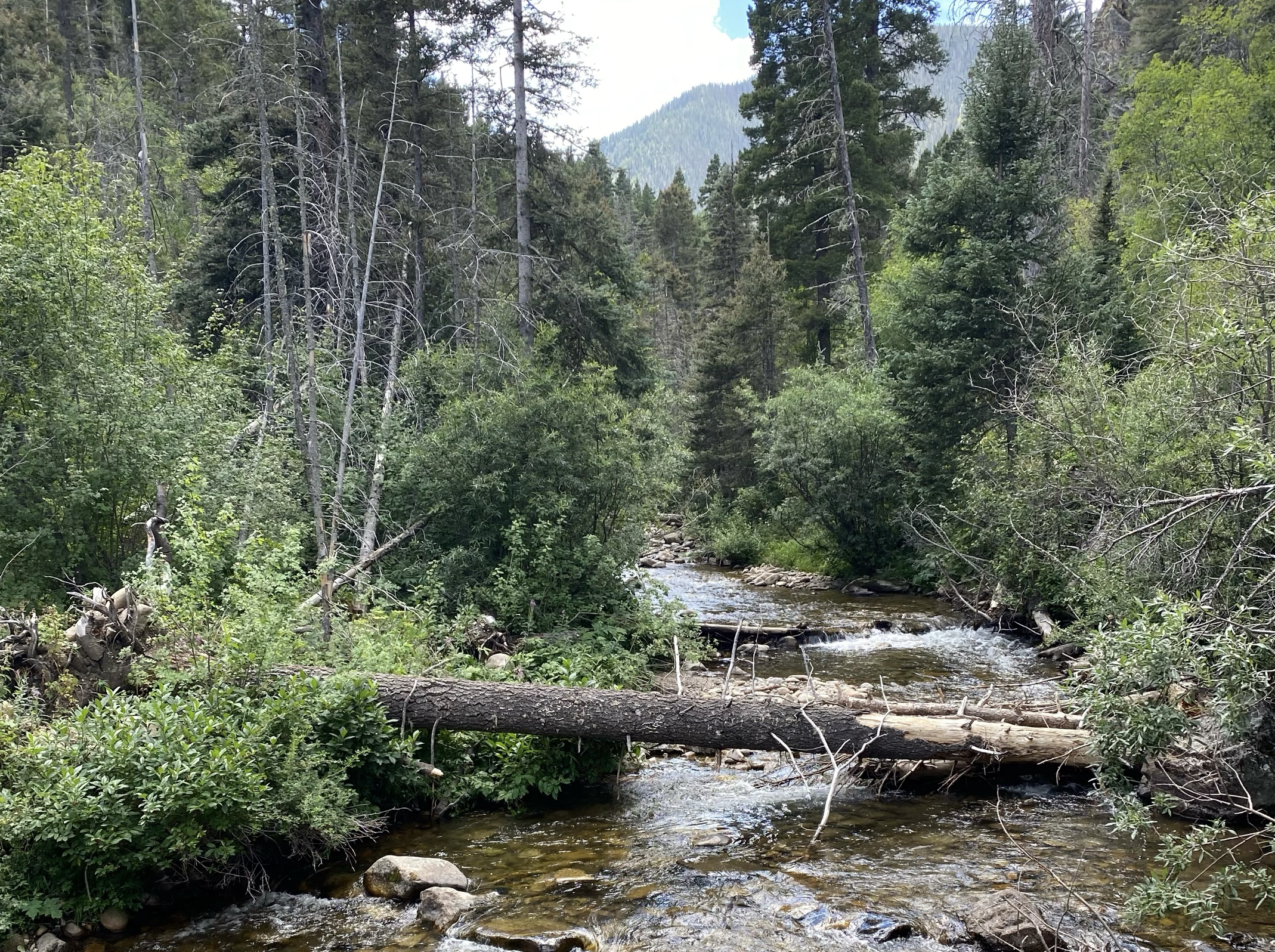
When I'm looking upstream, I'm searching for likely feeding lanes and holding areas. Many days, the trout in these mountain creeks are not visible, so your challenge is to assess where they're holding within the stream.
I will float a dry fly in a likely feeding lane, or a pocket of calm water closest to me, and work intermittent lanes across the width of the stream...this prevents my fly line from landing on top of a trout (and spooking it), and it also helps me to not make assumptions. Yeah, I began doing this after ongoing surprises with trout hitting my fly in the most unlikely places. This type of fishing can feel like work if you don’t change up how you fish on occasion. So, I do have days where I only hit the fishy looking spots, such as pockets of still water, the end of deeper runs, pools below small waterfalls, drifting a fly along the seams of fast runs…and, then I move on.
5, Casting ability, and which casts are essential.
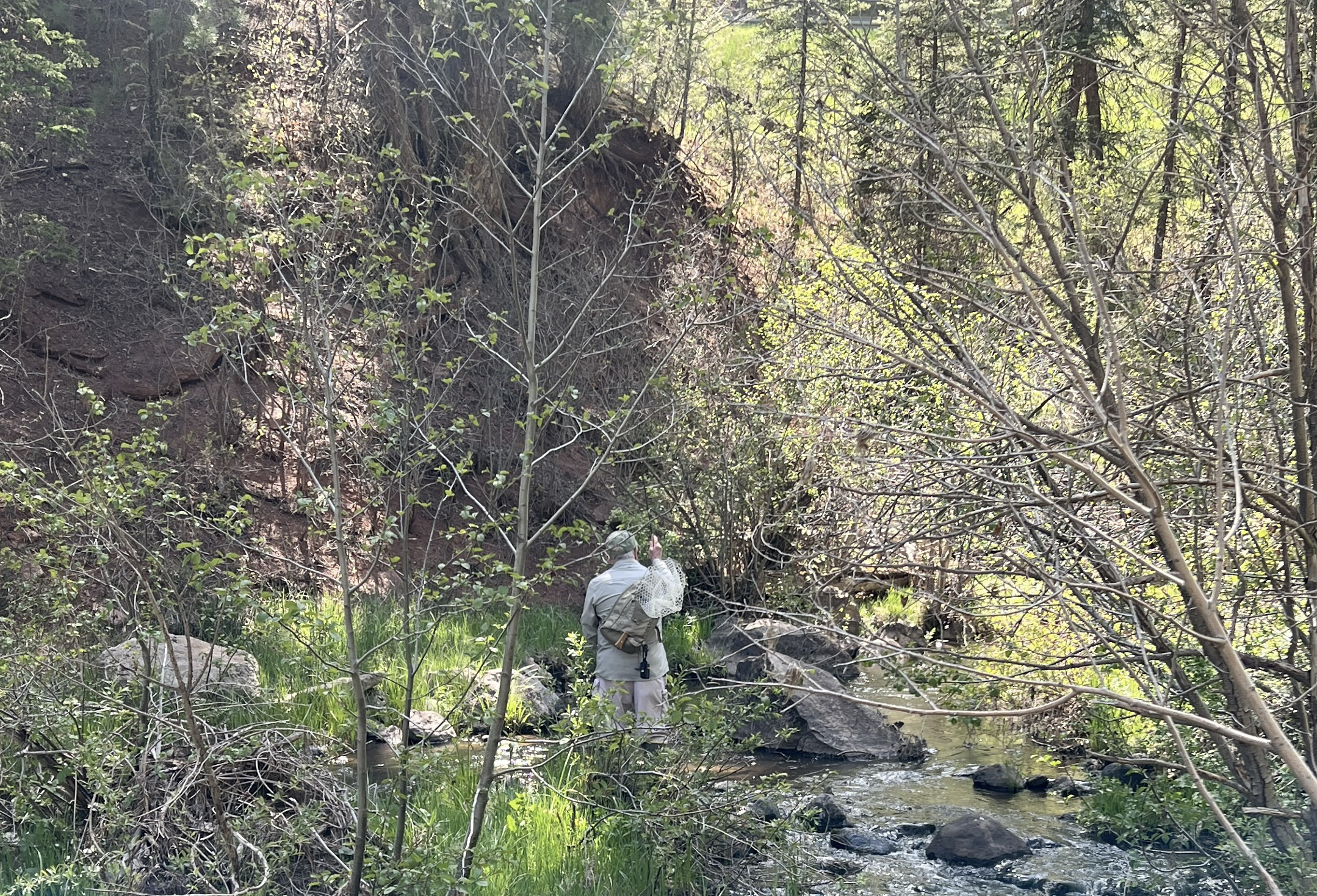
I’ll use a conventional overhead cast when possible, but tight canopies on tree-lined creeks will often call for creative casting techniques to land a fly in the right spot…roll casts, bow and arrow, side arm, and many times just a flick will do. Often, there is no room for a normal back cast, so I find the steeple cast as being essential for getting my fly line above the trees behind me.
Yeah, those examples are more conventional than creative. However, there are no names for some of my casts, and to an observer who sometimes asks, “What in the world are you doing?” I can only reply, “Making a creative cast.”
I meet quite a few anglers who love long-distance casting, on big, beautiful rivers, with razor-tight loops, and complex aerial mending. Often, they don’t find fishing my home waters very enjoyable. It can be frustrating for them. And I understand that because as a small stream angler, I don’t enjoy fishing on big, crowded rivers as much as I used to. Hiking the backcountry to a beautiful, remote stream and having it all to myself is the ultimate fly fishing adventure for me these days.
6, Entomology, what should we know.
All I know about entomology is that it’s boring for me. I can’t tell you the Latin name for any insect. Sure, I know the life cycles, but I’m a dry fly fisher. I can observe an insect floating on the water, or flying over the surface, and pluck out a dry fly from my pocket Wheatley to match its size, color, and physical appearance quite easily. Nope, I don’t tie flies…and, I don’t feel bad about it either. After all, John Voelker didn’t tie his own flies either. I’m with him!
7, Rise forms, can they tell us something?
Stand still for a minute - this sounds silly, I know. However, I have found when I get near the stream's side, if I stop and just stand still for a minute or two (use time to assess feeding lanes and look for movement), I will often havea trouthitting my dry fly on the first cast. I do this whether I’m fishing from a bank or wading in the stream. There have been times that I've stood still for several minutes, and only then began seeing ripples, or subtle waves, or just a slight bulge in the stream’s surface, alerting me of a trout’s location…and, that’s what rise forms tell me. The location of trout.
8, Fly selection, size, shape, which flies are essential?
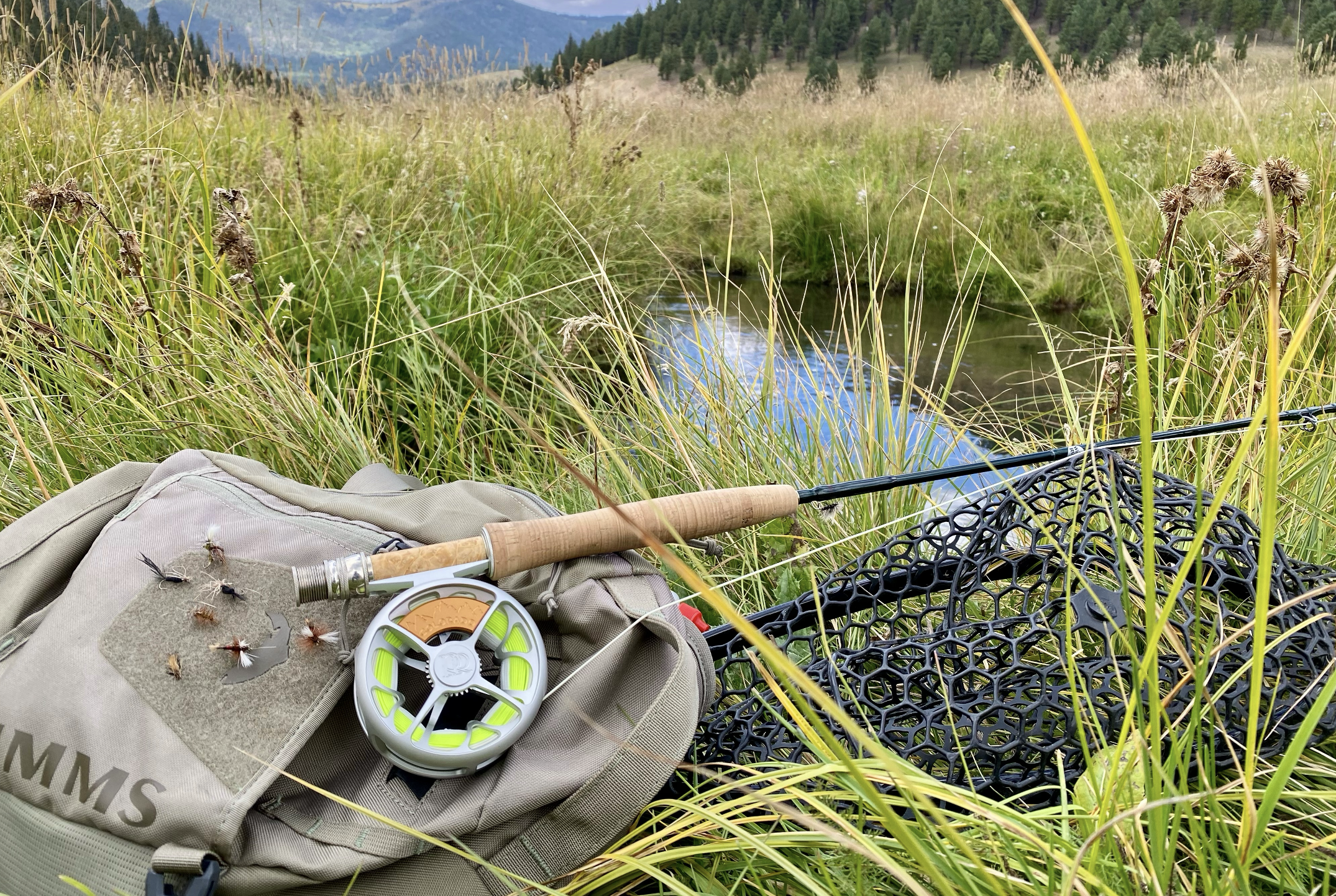
For home waters, I could use only six dry fly patterns if I had to. I focus on getting the right size and color of dry fly, for any given environment, with color being the most important fly selection factor. Our Leetle Fellers aren't that picky, but getting the color right does make a difference in how many are slamming the surface for a bite of perceived food.
My six essential dry flies in #12 to #16 sizes are: Black Flying Ant; Black Elk Hair Caddis; Grey Parachute Adams; Olive Parachute Hopper; Orange Stimulator; and a Royal Wulff. My fishing buddies don’t ask me about nymphs and midges. They know I let trout have the bottom of the stream for safe haven…however, when a trout rises to take my floating fly, well, that's fair game. Yes, I’m a dry fly only guy.
One more thing regarding flies. I do keep a 32-compartment fly box in the truck on my fishing trips. It’s stuffed with a variety of dry flies, and I call it my “Hail Mary” fly box. In case the Leetle Fellers are not interested in any of my essential flies, there’s usually a fly in this box that will match the hatch. Mostly, I only consult with the Hail Mary box when I’m on extended fishing trips to unfamiliar rivers.
9, Presentation and drifts.
The softer my fly hits the water, and the less disturbance my fly line makes in the stream, the better my luck. And, the lighter the fly line, the easier it is to avoid splashing water and spooking the trout with my casts. This is why I fish with a 2wt rod most of the time on my tiny mountain Rio’s. When I’m fishing a 2wt line, most often it’s with my Winston WT 270 fly rod. Tom Morgan was a genius at designing creek rods, and those old classics are perfect for my little Rio’s!
I’m always conscious of my casting angle in preventing the fly line from landing over trout. I start casting from close in, drifting it through all the feeding lanes, working incrementally across the stream to the opposite bank, before casting further out to work another section of water in the same
fashion. This is my drill as I work my way up a stream.
10, Upstream or downstream.
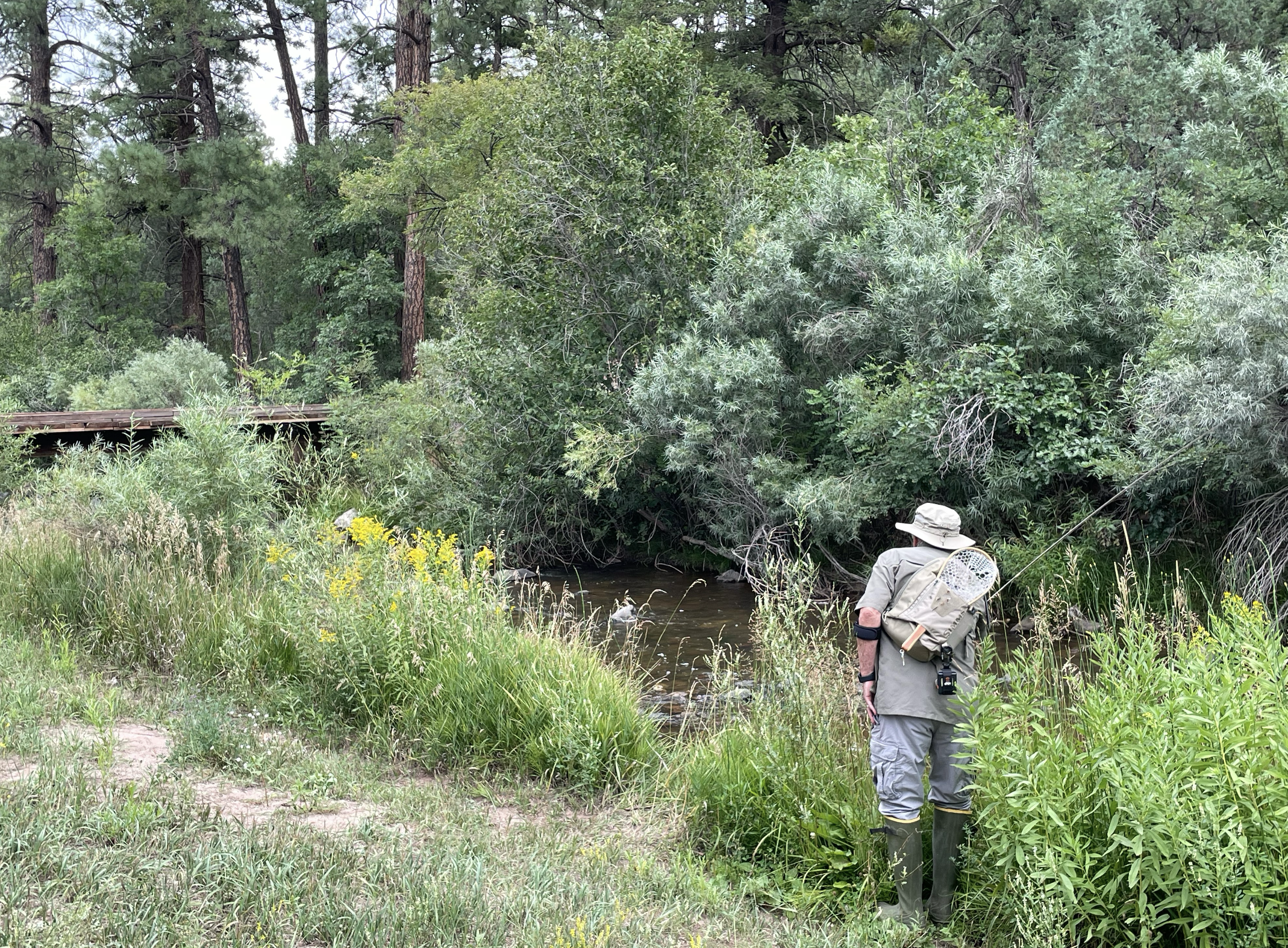
Casting upstream improves my chance for hook sets. It’s just more effective on my tiny Rio’s than when I’m casting downstream. I’ll do anything to minimize the risk of the Leetle Fellers spotting me, and fishing upstream helps me do that. About the only time I’ll float a fly downstream is when it’s impossible to reach a fishy looking spot with any kind of upstream cast.
11, Fighting Fish.
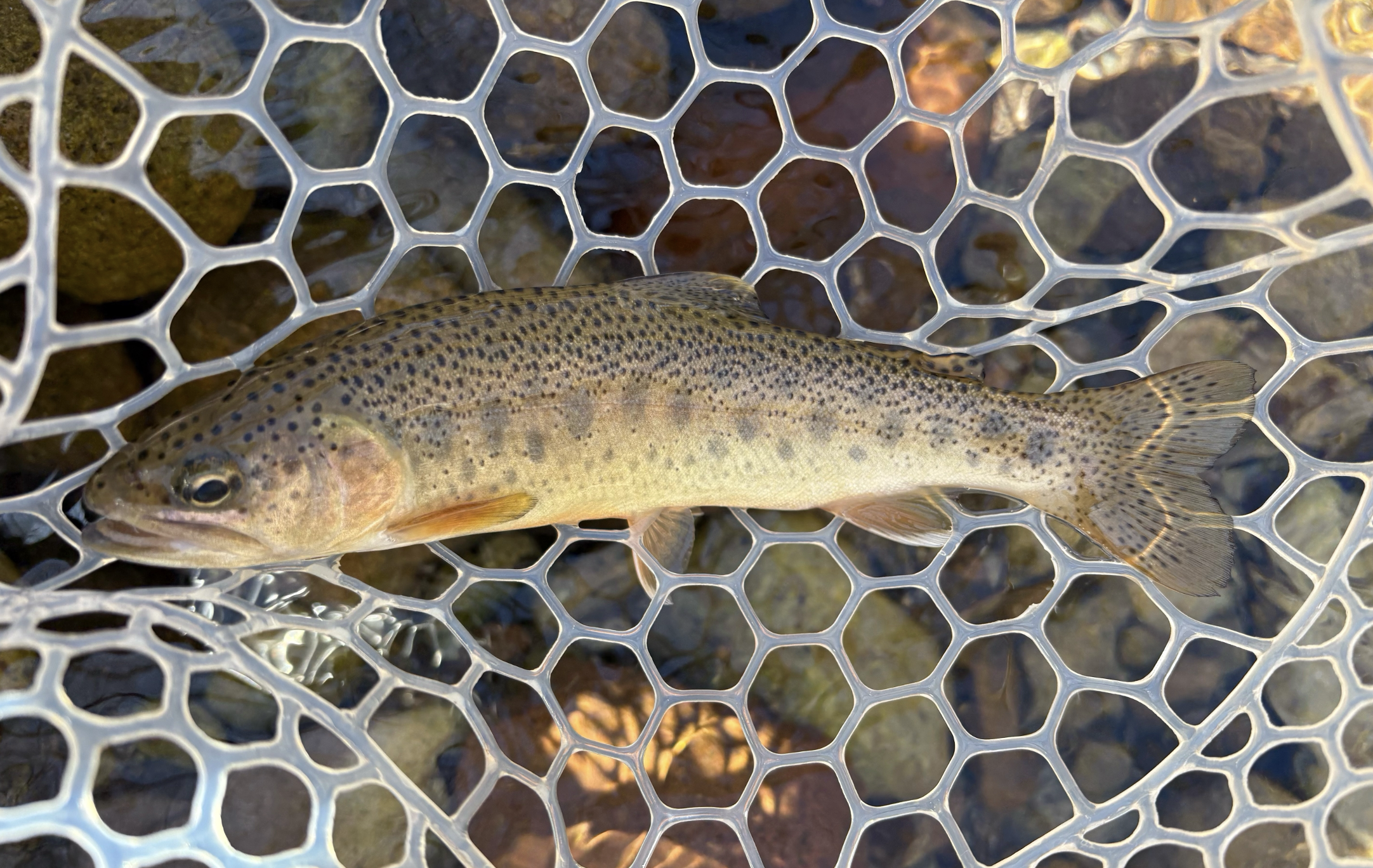
I mostly land trout in the 8” to 14” size within my home waters, with 10 inches being the average. I say that because it’s not what I consider a “fight” with these trout, like what I experience on the San Juan River with 20 plus inches of fat, angry rainbows, and browns. No, when I have a tight line with my Lettle Fellers, it’s more like a dance…a fast dance.
On very narrow streams, the most important objective when setting the hook is to keep the feisty trout from darting into the undercut of the stream’s bank…they can get there in a flash! To manage this, upon setting the hook, I squeeze the line between my finger and grip, and slowly strip line, while keeping the trout in open water. There is no time or enough stream width to get the trout on my reel. And that’s another reason why I love Winston fly rods…the tip section is magic, as it flexes with the head shakes and tugs. I honestly can say I land more trout with a Winston than I do with any other make of rod, and I own some of the best from other companies.
Yes, I do love small stream fly fishing. And, in any given year, I will fish 60 to 70 days, with most of those being day trips to home waters. Life is short, and because of that, I try to be in the moment while fly fishing at high altitudes for wild trout. And, to have adventures in beautiful landscapes, with mountains, trout streams, and in a region full of rich culture and history, I am truly thankful!
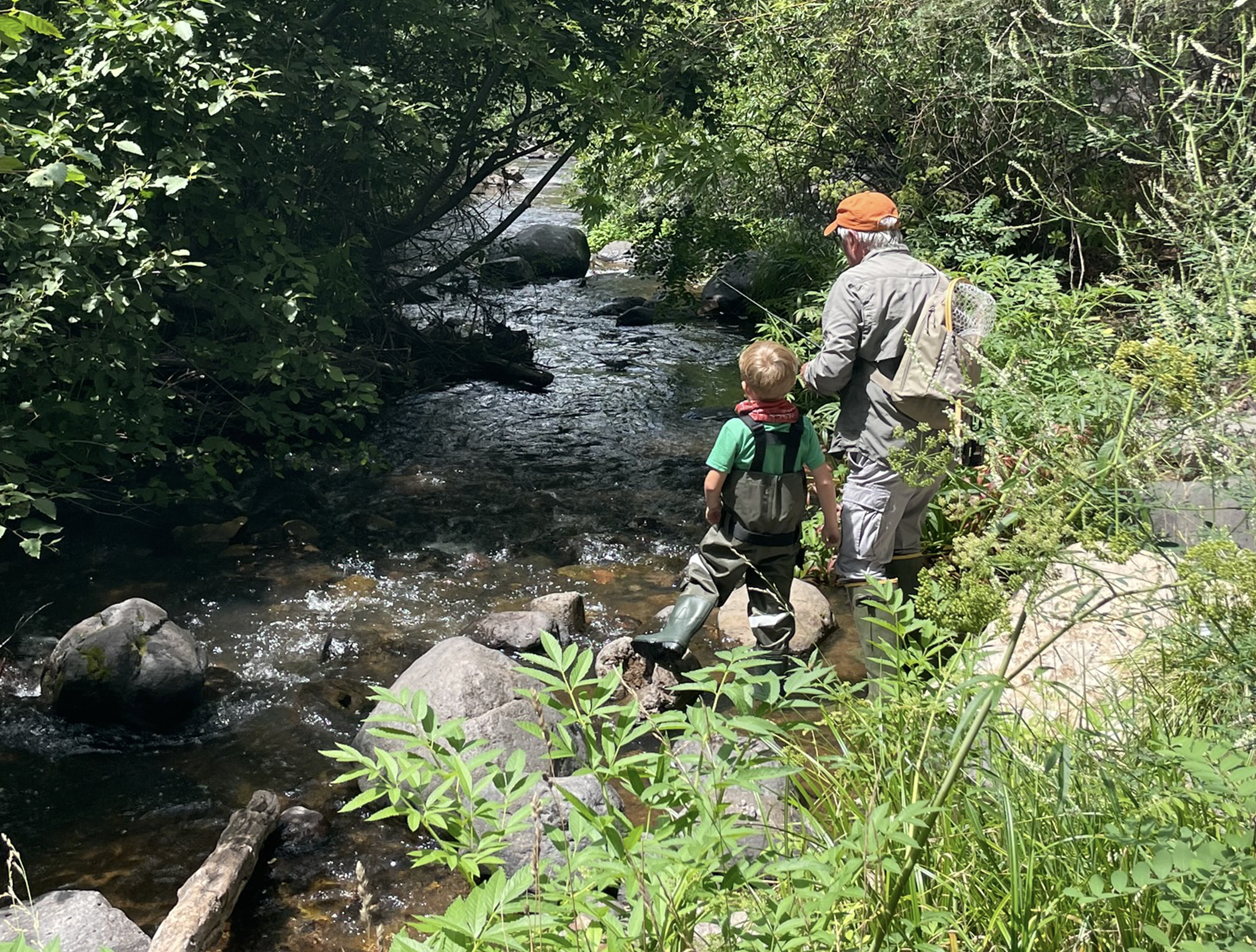
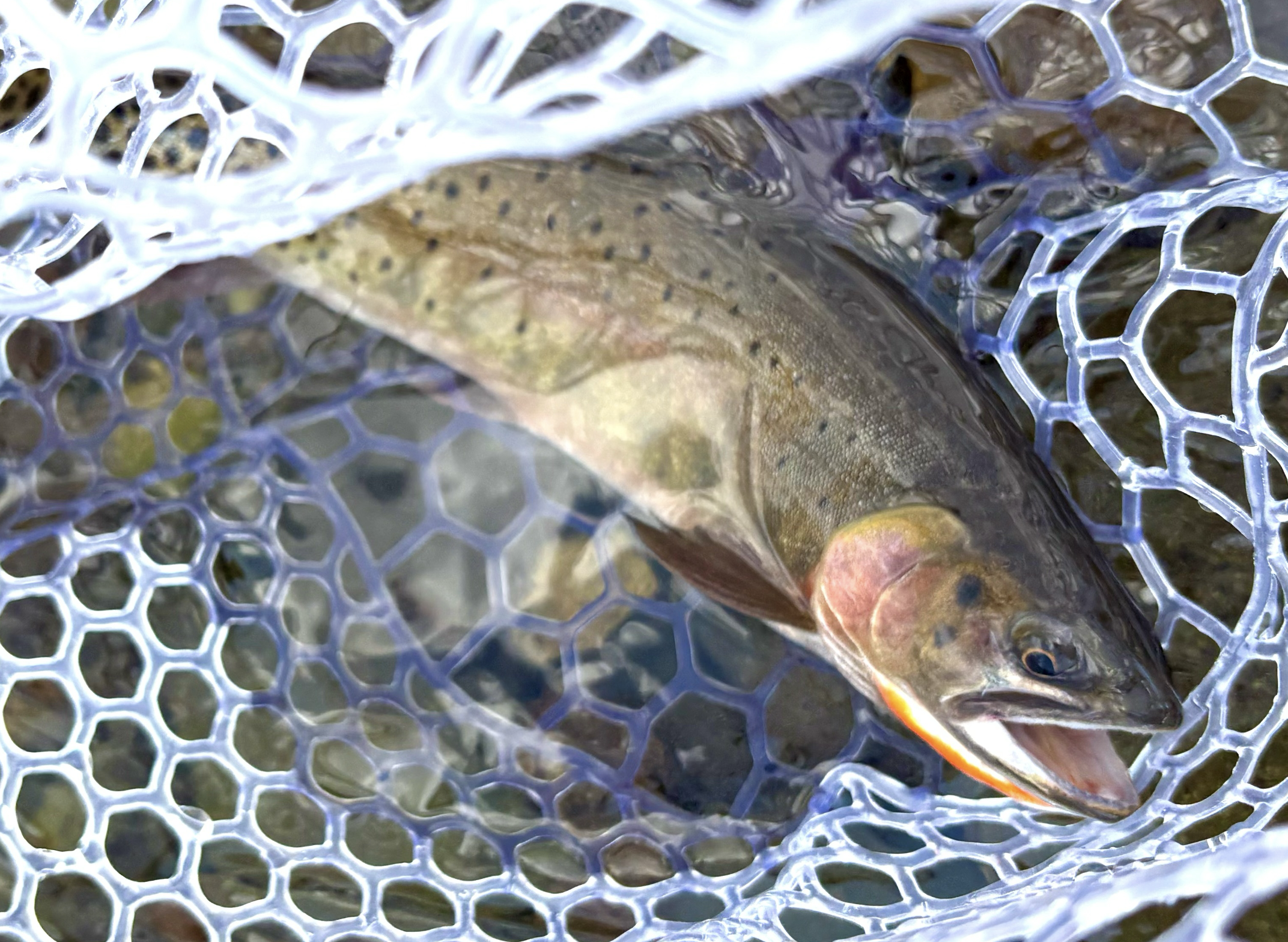
Note - the trout photos are New Mexico’s two native trout species: Rio Grande Cutthroat Trout; and Gila Trout. My favorites! And, I use the nickname, Leetle Fellers, for all trout species that swim the waters of this region’s high-altitude Rio’s.