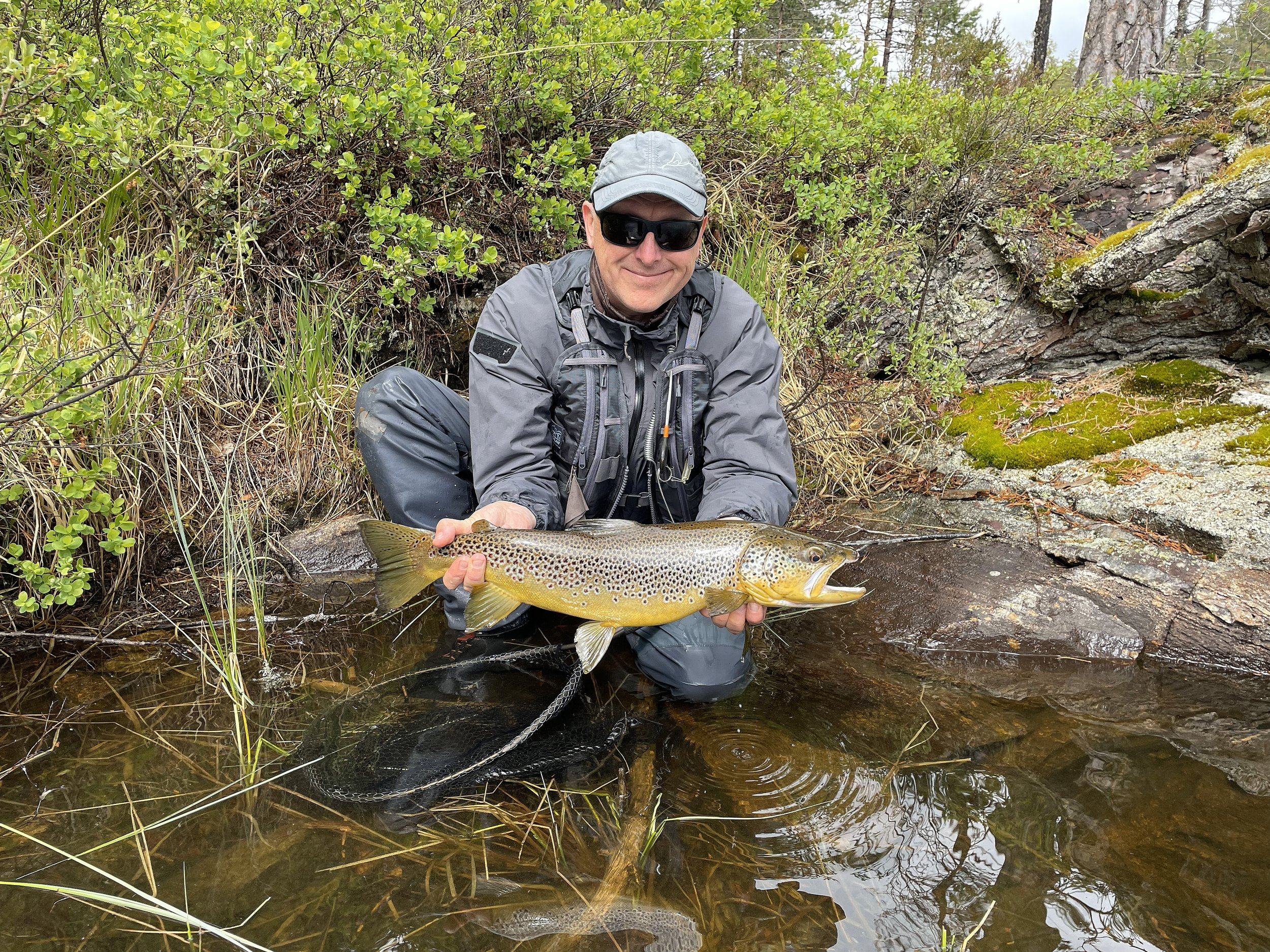
Rune Andre Stokkebekk
Photos by Alvaro G Santillian and Rune Andre Stokkebekk
1. Choice of equipment Rods, reels, fly lines, fly floatants, clothes, glasses and other useful items.
Having fly fishing as a job surely makes the pile of stuff grow steadily! However, I find myself using a few rods on regular basis and these are my favorites. I never go fishing with one rod, that’s how it is, I like to have one rod for dedicated dry fly fishing and another for nymphs, streamers and other setups. I’m fortunate to be a part of the Guideline product development team and my favored rod action is typically mid-to three quarter flex. I like rods that bend progressively and the feeling of this. For me and my fishing I think this kind of action has advantages such as more secure playing of the fish, smooth presentations that are easy to control and great protection of the finer tippets. So, If you wonder why our rods are like this, it could be that I have a role in the development process.
The All-round Rods
Typically, I use the 9ft #4 LPX Tactical or NT11 9ft #4 as my nr 1 all-round dry fly rod and the 9ft #5 LPX Tactical as my nymph/streamer/big dries weapon. My most used line on these rods is the Presentation+ in same line rating as the rod. This is for me the most versatile line and since I’m fishing in places where I have to vary the casting between overhead and Spey casts it makes it the ideal option for me. This goes for fishing in lakes and quite a few rivers I visit. If the fish is not too big I always bring the #3wt 9ft LPX tactical with same line as the other two, this is a gem for fishing with small flies and normal size trout’s.
The Special Rods
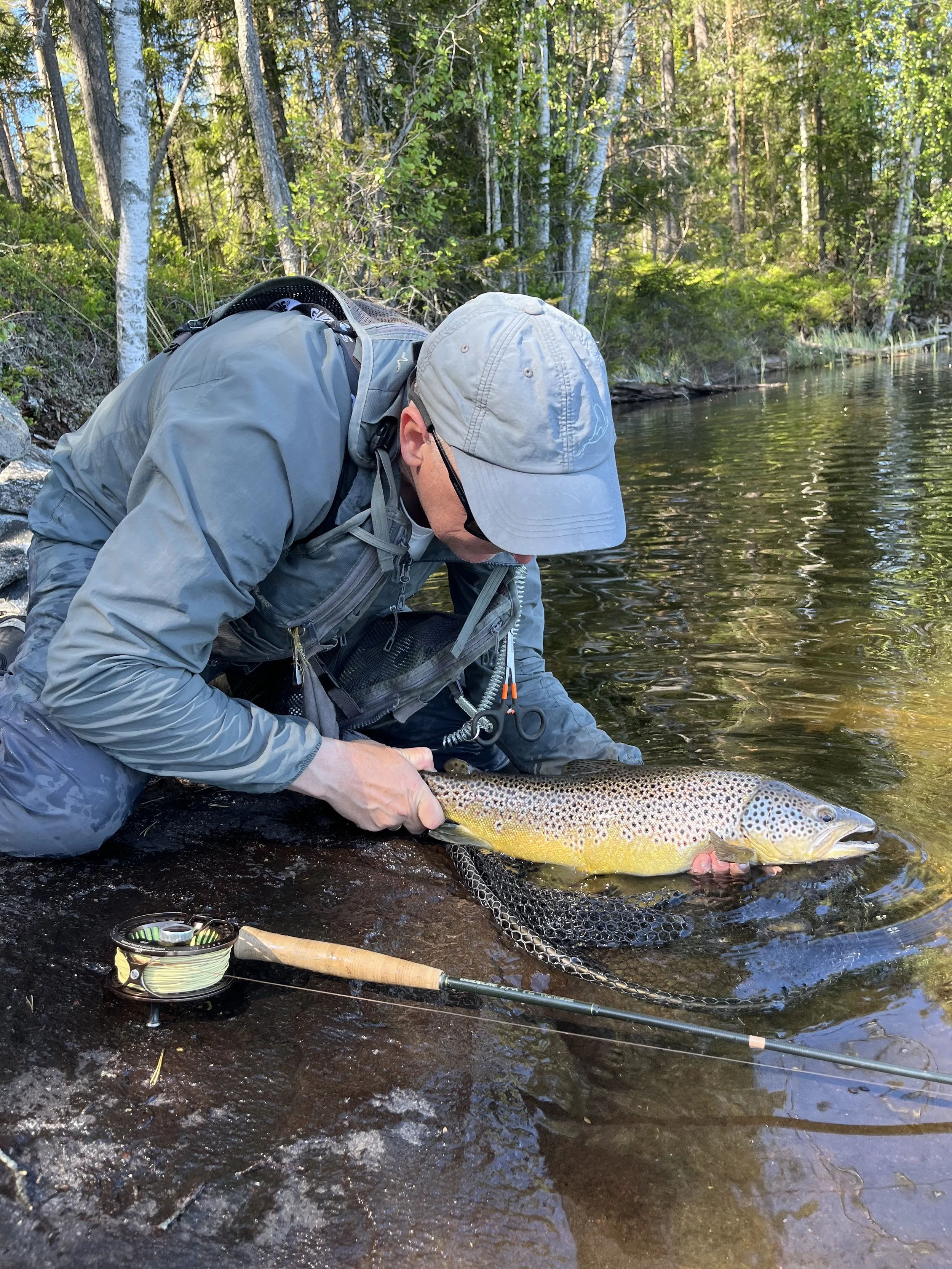
However, if I fish in small to medium sized rivers I really like the longer dry fly rods that gives you better reach and control of the drift and presentation. The LPX Tactical 9’9” #3 or NT11 #3 9’6” are the two rods I like for this fishing. Which one to choose, well that is hard I love them both, so they get equal time on the water. For these rods I use the Fario CDC WF #4, this line is on the lighter side of the scale when it comes to weight, going one line up on that line is never wrong if you want the setup to be a little more “reactive” so that you get the feeling of a little more “load” of rod on the shorter casts. The Fario CDC WF is a superb line for technical fishing both in presentation that is light and delicate like a feather, hence the name. And when it comes to suppleness and how thin it is which makes it better to follow the currents in the river and ultimately resulting in less drag than a “normal” thicker line. Both these longer rods setups are also frequently used when I fish in lakes from my belly boat during the midge hatches in spring and autumn. The benefit of the setup from a low casting position is easier high casts and a “longer” flight of the line. Yes, the CDC line don’t sag with its belly like many other lines and this results in more time to perform the cast and a lot easier handling.
Other Stuff
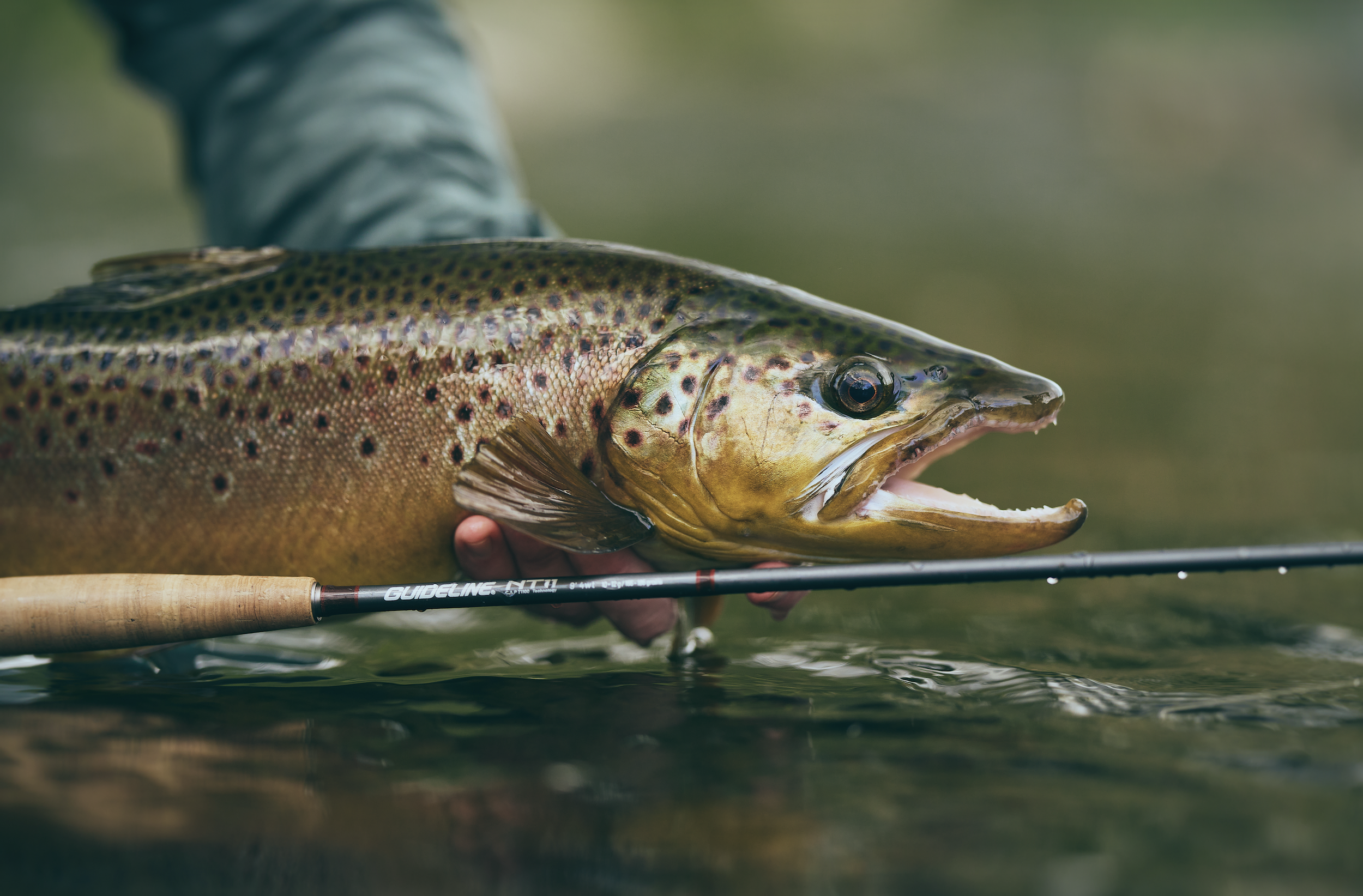
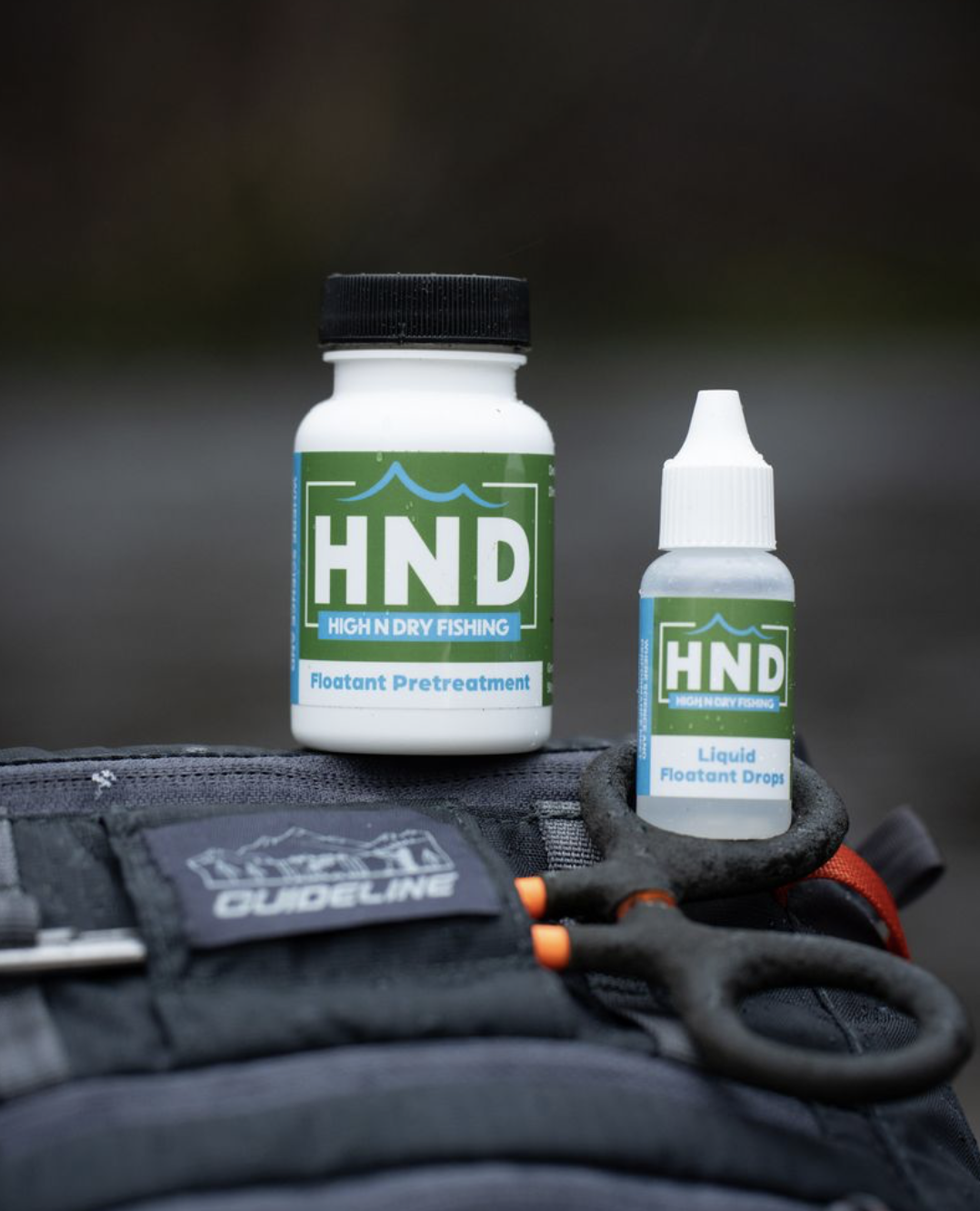
The flotants I use most are the High’N Dry (HND) Liquid and powder with brush. And I do also use the HND pretreatment liquid by the vise on certain flies with materials that absorb this liquid well. Typical examples are flies with bodies of natural dub, silk and dry fly dub like fly-rite or superfine. Pretreating the flies make them easier to revitalize and I can use them out of the box too. By the water I add the liquid floatant and use the rubber band to cast off any excess. Revitalizing after a fish is normally done with the powder brush as I do fish a lot with flies of cdc and “combing” the fibers brings them fast back to their natural state.
2. Leader material, build up, length and knots.
Back in the old days I used to tie my own leaders of many sections of mono with different thickness to get the taper and properties I wanted. Then I had a period of using polyleaders as the butt section to which I added tippet material in several down tapering sections. Nowadays things are easier, Guideline just launched a new extensive leader program which I have been a part of when it comes to design of the trout leaders and its tapers. With exception of short-range fishing from the bank in a lake I tend to use a leader around 18ft as a standard.
All-Round Dry Fly Leader 18-22ft
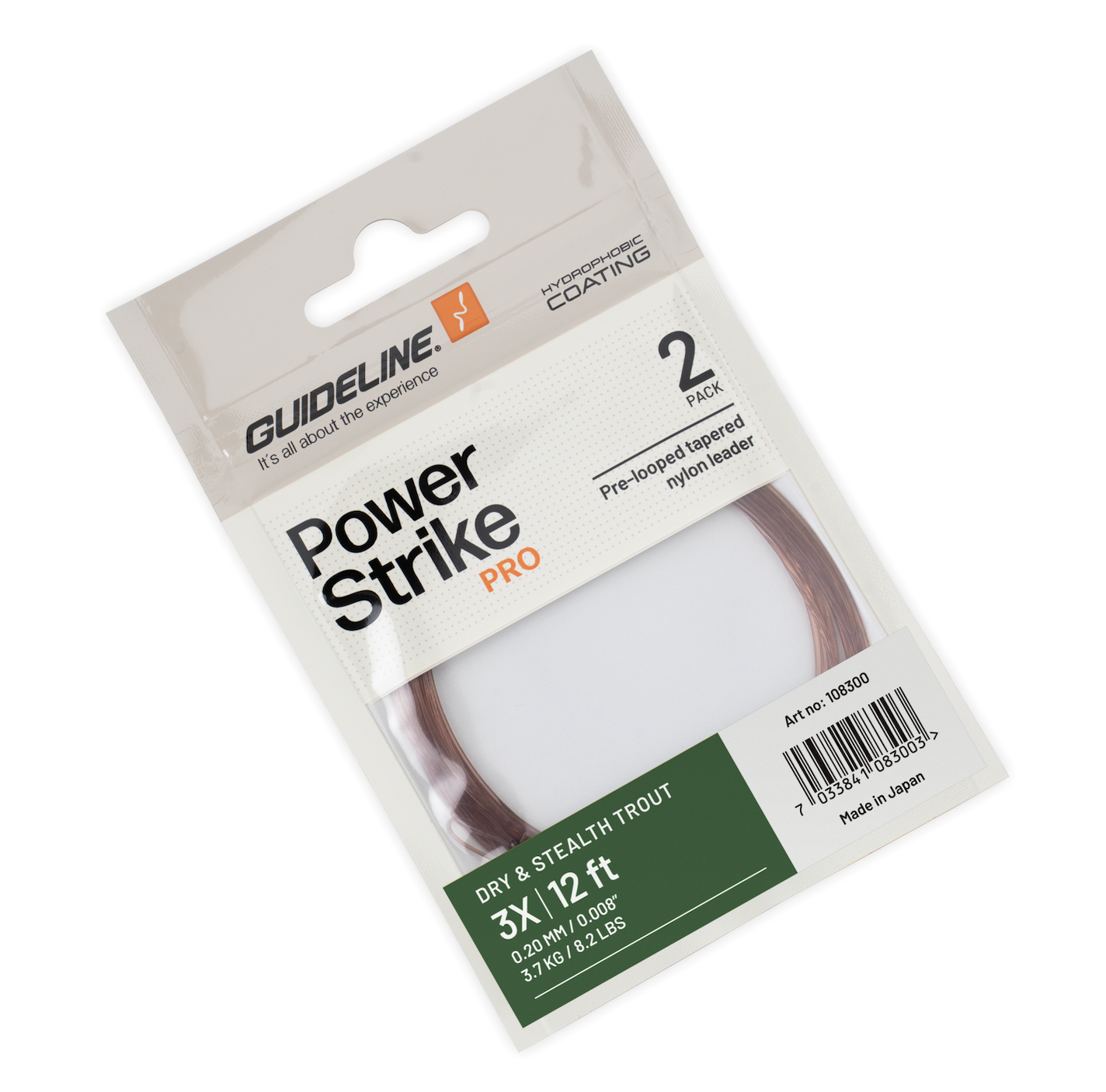
My allround dry fly leader is built from a 12ft tapered leader, the new Dry & Stealth is made to be customized. I use a 3 or 4X variant of this leader, normally 4X and just add a 2mm tippet ring, another section of 4x. Then tip of 5X like 1,5-1,8m. If I want a 6X tippet I add 50cm 5x to that 4x part and then the 6x tip of 1,5-1,8m. With this config I can present the leader dead straight on the water when I fish in the lakes, and I can also put in a little slack in the front in the river if that is required. However, if I’m facing a difficult current, typically when the fish is on the far side of faster current and I must cast across I add more tippet, +2m to get a lot more slack so fly can drift that extra meter before the faster current pulls in the line.
The knots I use are simple; Crawford for the connection to the tippet ring and same with fly unless I need a looped knot. Of the looped knots I like the Non-Slip Looped Knot. The Orvis knot is my favorite for joining the sections I add. For me this knot is more consistent in strength than the surgeons knot which I used some decades ago.
For tippet material I have used Egor fluorocarbon for a long time and that is my most used material, and I use this for all the added parts to the tapered leader. By using a tippet ring I avoid splicing two materials with different properties. Fluorocarbon is harder than nylon and demands more precision when you make the knots to maintain sufficient breaking strength. I like the flexible option with the ring and it has never let me down. Just remember to re-tie the knot to the ring now and then because it will get weakened.
There are times when a 18-20ft leader is totally unnecessary, for example when I fish from the banks in lakes with limited space, small creeks etc. Then I do it easy by using a 9 or 11ft leader and just add tippet to it. With this setup I want to be able to cast with only the leader and want it to be very easy to turn over. Check out the new Dry & Dropper leader from Guideline, that one is a quite strong option for this kind of fishing!
3. Approach and stealth.
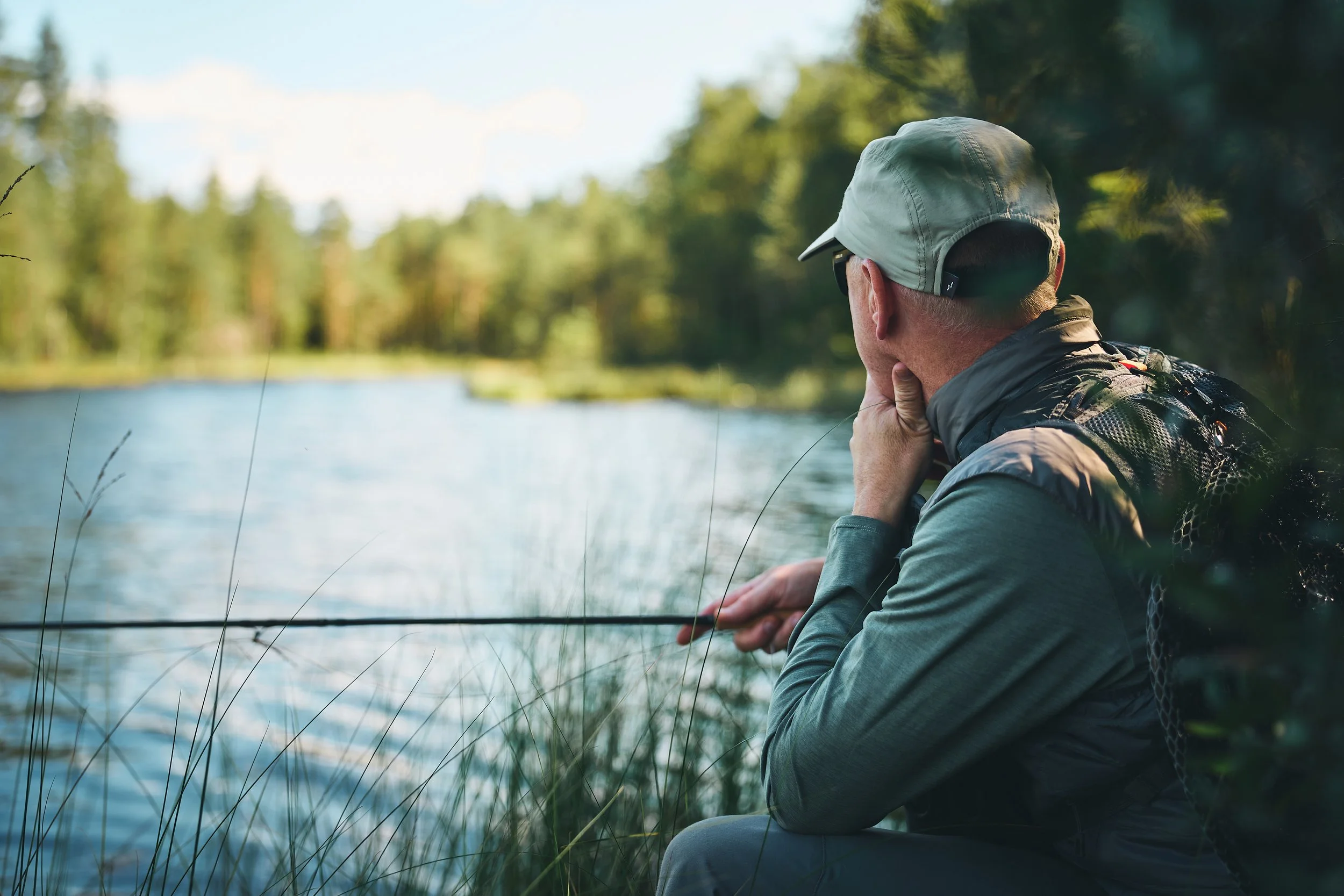
This is probably going to be a repeat of what has already been written, but what the heck. There are quite a few things that it is important to know about and of course remember to do them when you get excited by the look of the water or see rising fish. Walk slow along the banks, doing so you will see fish more easily, you gather more intelligence about fly life, etc and you also spook less fish. The trout don’t like fast movements from you or any other objects, that also goes for the fly line. A fly line is like lightning on the sky and makes the fish wary or spooked, avoiding false casting over the area where the fish are is important. If you fish blind, start with short casts and work your way out with maximum the length of your leader, then we avoid showing the fly line to the fish. Keep low! When moving around, try not to “stand out” if you walk along the river with high banks and area is open with not much trees etc. Walk far away so that you are not shown on the horizon for the fish. Blend in, when you are at the bank, use the trees along the bank for your benefit, patrolling fish know the surroundings and if you sit- or stand exposed with nothing beside you, well then you are most likely spotted! However, if you lean towards a tree or something else you blend in and the fish is not so surprised when it comes to where you are. Don’t kick the rocks! Sound under water is transported faster (5X times) and can be louder than in the air. So, when you wade try not to kick rocks and rub them against each other. It’s one of the reasons I don’t like boots with studs, they scare more fish. Also, when you fish at places where the banks are soft, walk very gentle so you don’t send out shock waves. Remember, fish are often along the banks, If the fish is not disturbed all the time they behave naturally and are found along the banks. That goes for both rivers- and lakes. Observe both when you move around and are still, pay attention and give it some time before you start to hammer the place. Have a look at the water and in the bushes for insects, check the spider’s nest. Take a little time before you start fishing. Especially if there is not much happening or you have those random rises. Pick your position and ask yourself if the gear/setup is well suited. When fishing in rivers optimizing the leader can be necessary to have a good presentation/drift. Check the tippet, knots, tie up fresh if you have the slightest doubt about the quality. Plan where to place your cast, if the current looks difficult, evaluate where to drop into position. A shorter test cast can be a good thing just to have things confirmed so that you are not surprised when you go for it. I often do this also to tune in at the ideal length of the cast.
4. Reading the water.
Reading the water is basic knowledge that tells you several things. The most common association with this question is where the fish is most likely to be. I spent years practicing worm fishing in my childhood and it taught me a good bit about where the trout is most likely to be. Trout likes to hang out where most food is gathered, and it should also provide shelter and safety. Fish must feel safe to feed. Look at the river, often you will see where most of the bugs float. That is where fish are somewhere. Trout is also quite stationary, during the year. Normally that actual fish you saw or caught will be within a few hundred meters. Most likely much smaller territory. At normal water level fish have a spot, so on high and low. It changes with the volume of water flowing and so does the currents. Generally, higher water, the closer to the bank the fish is. Some fish are always close to bank because that place is good year-round, other places can be good for a short period, water is calmer, trout don’t like strong current if it can avoid it. So always be very gentle when you fish at high water, trout is near and still spooky even if the river has a little color and is big. And when the main river is unfishable, look at the tributaries.
The other part of reading water is what we can expect from it by looking at the bottom and surroundings. I think this is more overlooked and interesting than the first part. And it is very important when you are new to a place. What we can expect from bug life is knowledge that will give you many more fish once you know what to look for. If you know the insects’ criteria for habitat and you know those different spots in your river you can seek different places when your initial plan fails. To sum that up, hatches can be local on the river, if the time is right and nothing happens then it’s time to move to a different location. Seek up a place with other characteristics, ideally with a bottom of other types of substrates. Back eddies are where the stuff gathers up and quite often there is a nice cocktail of things gathered up there. Not only on the surface but also on the bottom. Silt and gravel build up and create a different habitat than where the river flows more in a straight line. This has saved my fishing many times, cause in the back eddies in the rivers I fish there are quite often pretty good midge hatches when rest of the river is quite dull, especially in early season.
So pay attention to the river bottom as much as the places the trout might be. Learn what lives down there and what type of environment they need. Spend time looking at many stretches of the water. Use maps with satellite photos. Look at bends, rapids, maybe there is a small piece of farmland there that send some good shit out in the river? Could mean something. More nutritious ground maybe, more bugs… Be curious!
5. Casting ability which casts are essential.
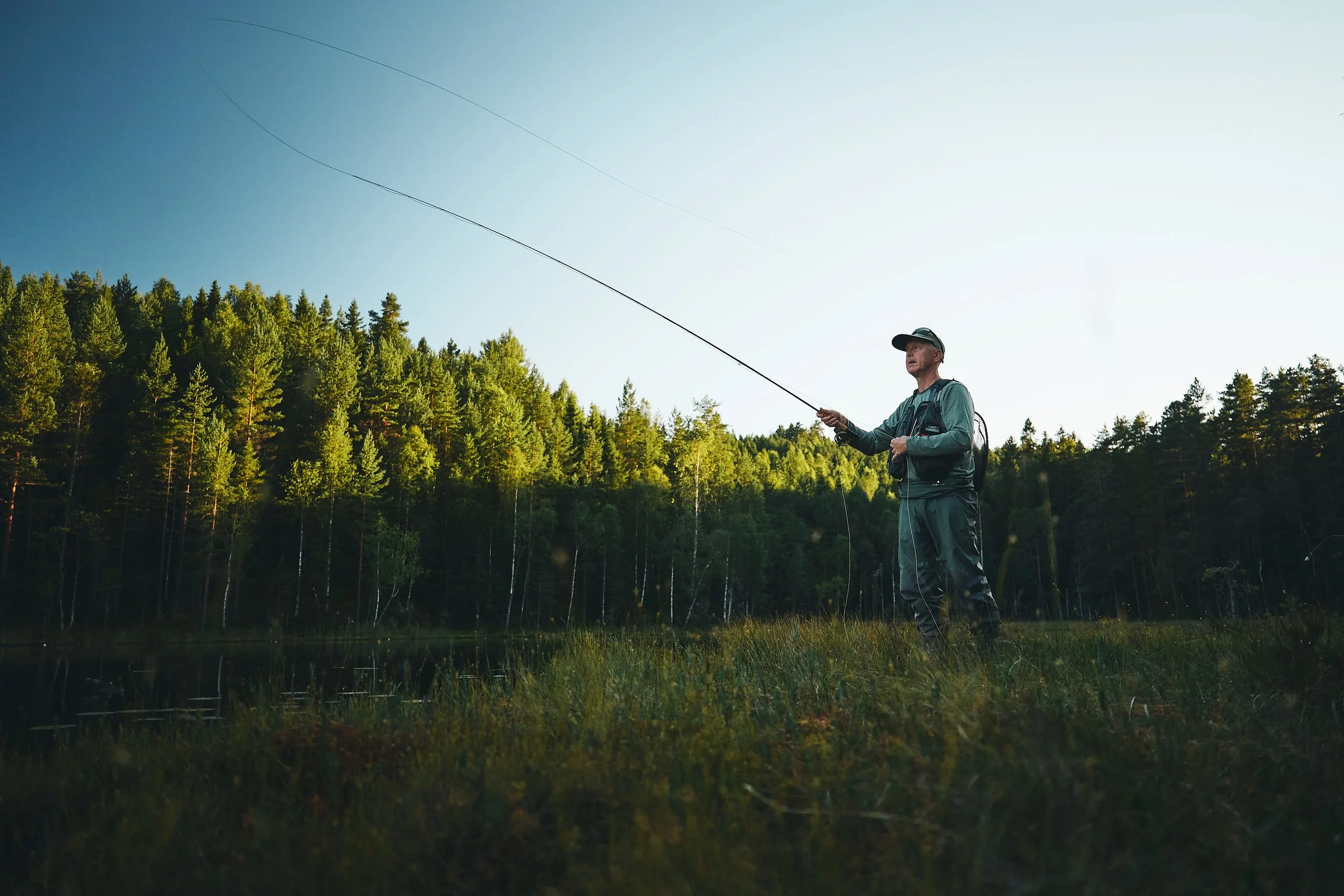
I fish in lots of different places during the season, rivers, lakes home and abroad. Besides overhead casting, the switch or spey cast is indispensable. When I learnt how to spey cast a totally new world opened. And later, when I learnt how to combine overhead casting with an airsnake that goes to a spey cast, well then it was complete in terms of waterborn casts for me. Being able to cast short and far with no back cast and with a good presentation of a well floating dry is a solid skill to have in your skills.
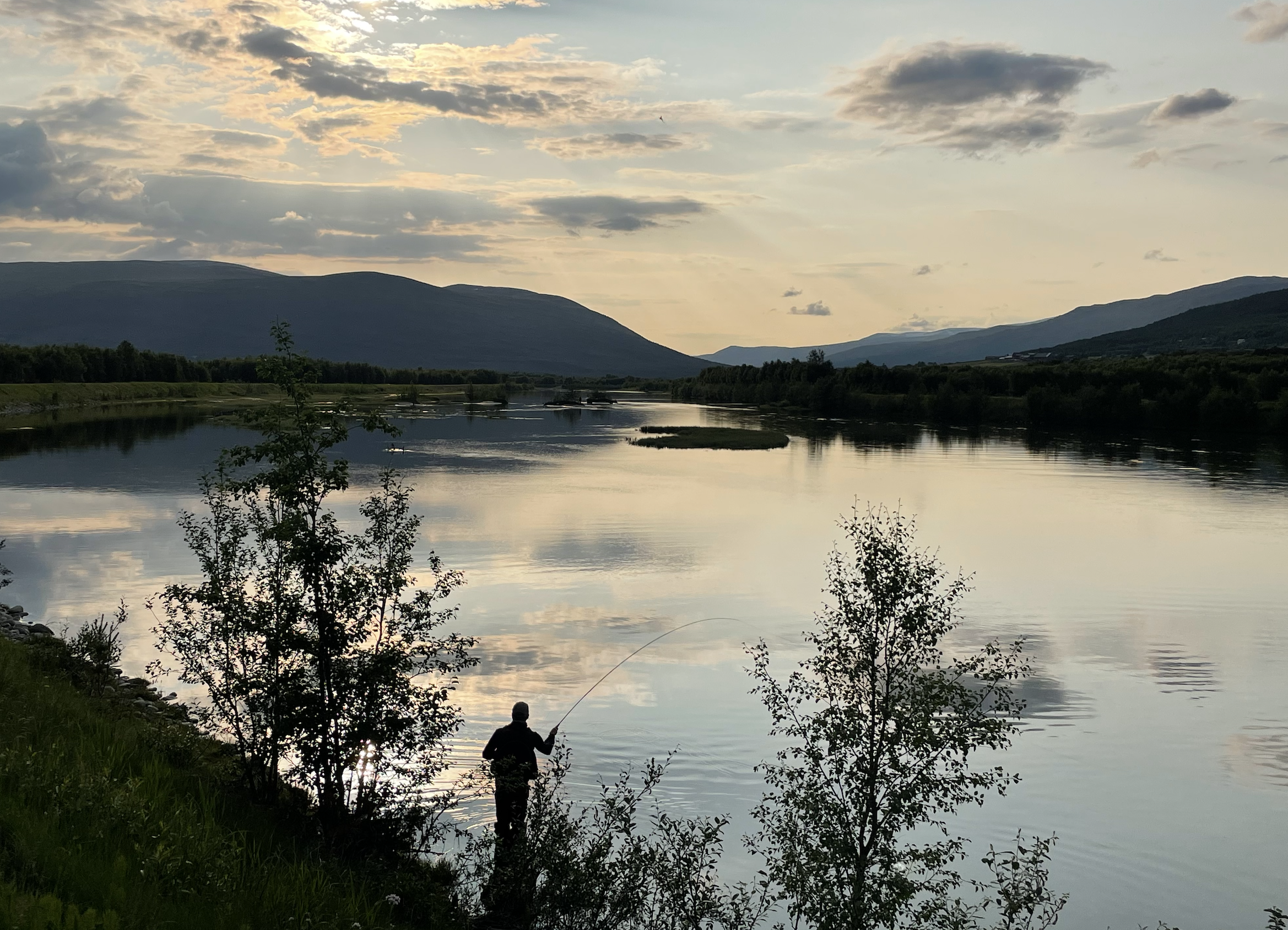
Quite often we are at the “wrong side” and being able to cast back hand or over the other shoulder is something that is very usefull. Learn it and use it! Then finally we have the presentation cast where the reach cast or air mend is the most used when I fish. In general practice casting when you don’t fish, and if the fishing sucks, practice casting at the river or the lake to kill some time and stay fit casting wise. Casting skills is like working out and getting in shape, in Norwegian we say that “good fitness is a perishable commodity”. Meaning you need to practice/keep going to be at par.
6. Entomology, what should we know.
As I wrote in reading the water the most important part of entomology is what you can expect to find in a river or lake in general or at a certain time of year. If you know this, you can plan after it and be well prepared. Tie flies to match, book a holiday, and have something to look forward to. Not all hatches/insects are essential to match. The biggest part of the entomology is to find out what are the important bugs, when do they normally occur and what flies work.
What kind of weather the insect likes is often more important to know so you don’t waste valuable time on harsh conditions or wrong places. Aquatic life is driven by the temperature in the water over time. Knowing a bit about this will make you able to know when, and where to go. Terrestrial insects can be as important as anything else and these are highly driven by the weather and in general they favor nice and sunny weather and as little wind as possible. Ants are very important where I fish locally and can be the prime dry fly fishing of the season, both in early summer and fall. The few ant species that fly during early summer like nice and sunny weather. The ones in late summer and fall favor air with moist/ oppressive air. And these swarmings tends to occur at the same time every year within a window of a couple weeks. Picking the right days to go out can be very rewarding.
The gravity of the moon also has some impact although I don’t always see the relations to this. However, there is a kind of link between the moon and when fishing is good. In my dairies good fishing days have a link to the days before- new/full moon, if the weather is favorable.
7. Rise forms Can they tell us something?
They way trout rise can in many cases tell us plenty enough to select the correct fly and we can also get a clue about the fish size. There is not much that beats seeing a big trout doing a slow-motion head & tail rise, and not much that makes my pulse go higher either. Rises can tell us if the natural is moving fast or being one of them bugs trout like hitting hard when there are multiple insect types on the water. And rises can tell us where the prey is in the water column.
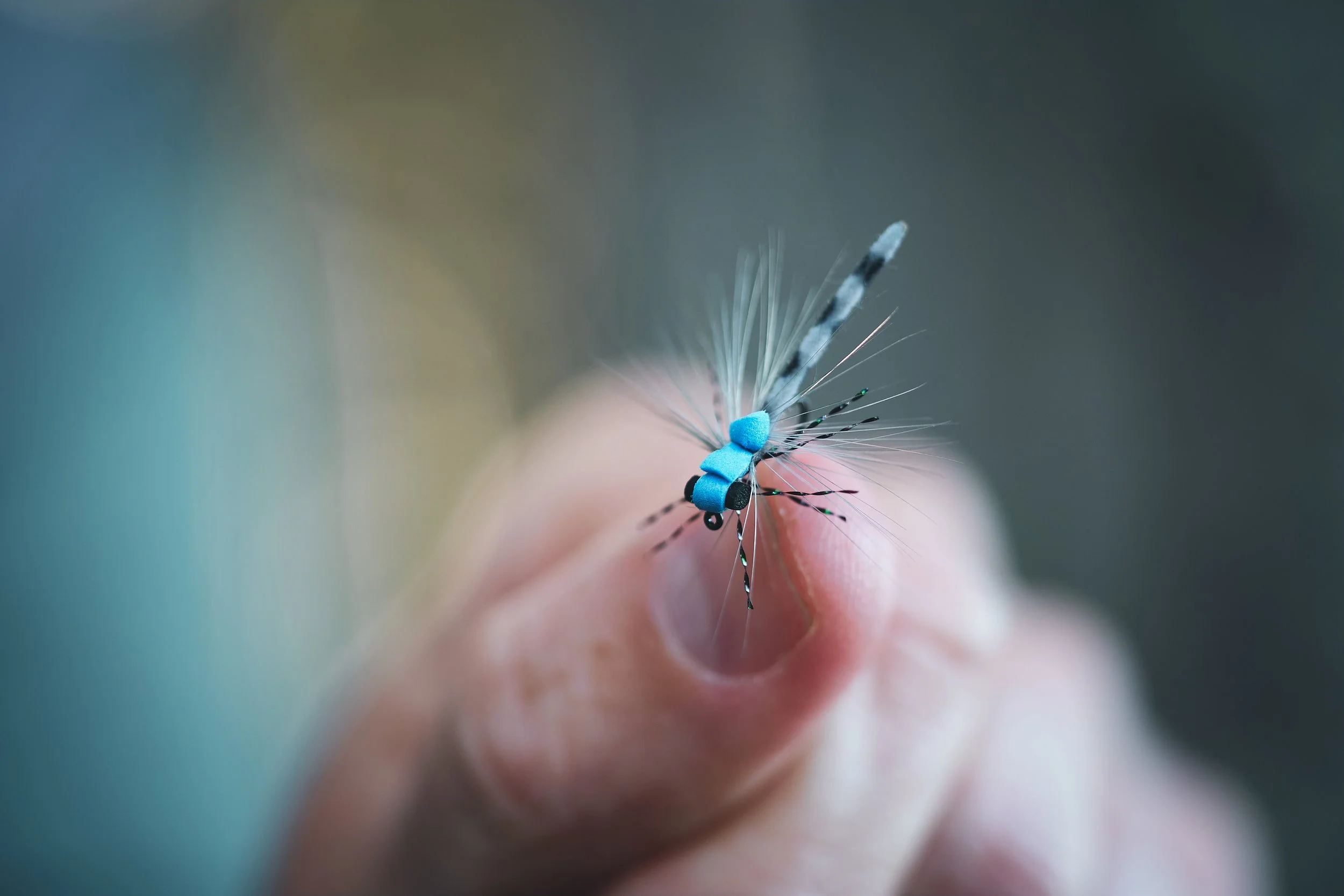
The trout has a soft spot for beetles and ants. And these two can provoke hefty rises with lots of drama, and it’s the same with caddis pupas and big mayflies swimming fast to the surface. Then of course we have the insects that hatch in the surface and transform into adults on the surface film. Both mayflies and caddis have species who do this and the tiny rises that hardly break the surface are typical for nymphs on their way up to hatch or lay just above the surface. Trout feeding on spent’s can also be very stealthy like if they are taking something just under. I think it’s equally important to know what kind of stage the trout prefers of a certain aquatic insect. For example, there are lots of mayflies that trout feed mostly on the nymph or emerger and there are also the opposite, species that are not interesting at all as emerger or even a spinner. If you know something about this, you will be well prepared.
8. Fly selection, size, shape, materials, which flies are essential, favourite fly.
Oki, what flies are essential, I don’t know to be honest. And if you know I really like to have the conclusion. In general, I think nobody knows, to say it quite “general”. Fact is if you ask 10 fishermen that caught fish in the same lake or river the same day you fished, you should not be surprised if you got 10 different answers. And if more than one said same fly, that’s no conclusion as we all tie our flies differently and the fish do have the vision to see small details. In general, I think that fish see what they wanna see and look for positives, if the sum of positives is greater than the negatives they will take it. And at the end of the day, fish is not selective all the time, that is merely a rarity.
If you are new to fly fishing, don’t sit down and tie up a load of flies without knowing if they will work. Most of the time trout is not very selective, but sometimes it can be hard, and in some flies, some small detail might be the trigger. Learn from others, listen to the guys with routine. You don’t need to know all the Latin names of the flies we love but know some main ones and your lifelong study and progress will become easier and more interesting. This won’t necessarily make you catch more fish, but you can communicate better with other anglers, share experiences and have a more interesting approach when you read articles.
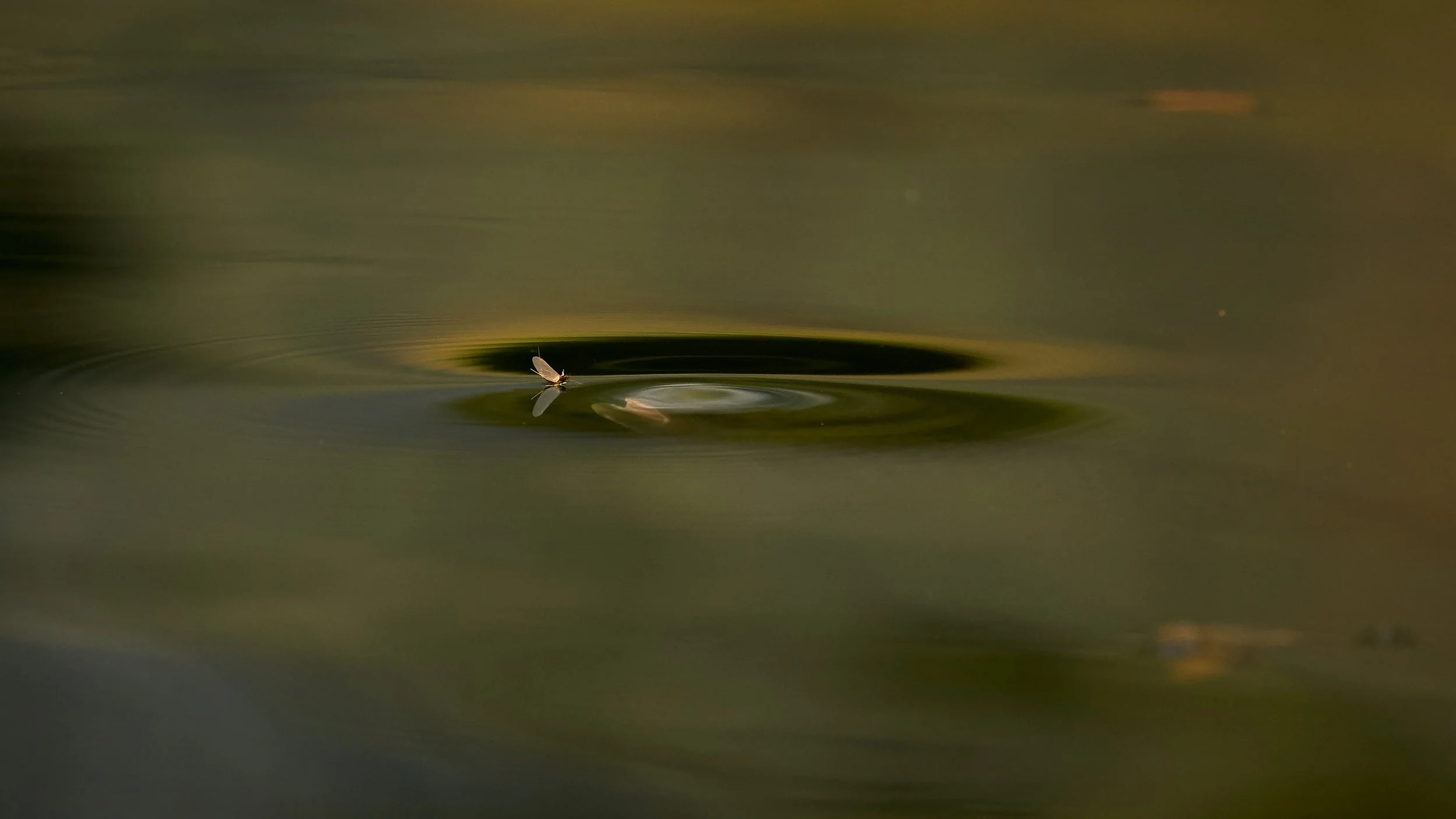
Like most I have gone from a stage of being obsessed about flies and colors to become a bit pragmatic. In my youth I had great belief that exact copies of the natural flies were a greater part of the deal. These days I have more or less 3-4 colors covering most of the mayflies and I’d rather have different styles than a bunch of different colors. And I think this is something the beginner and improver fly fisherman should consider if they did not. Choosing the appropriate design for the task is more important than the color or anything else. The places we fish can require a different choice of materials in the flies to succeed. For example, calm and flat water is better fished with sparsely dressed flies like no hackles if we talk about mayflies. And size on your fly should in many cases be a little smaller than the original to fool the trout in these spots that have all the time in the world to study your fly. And when you fish in broken/faster water where fish see less and have shorter time to decide, your success can be greater with a slightly larger fly or little beefier to make the fish find the effort worth while to go up and grab it. So, in my box you will see few colors and several styles based on this and how I will cast the fly. Cast the fly? YES! Consider it!. If you are stuck in a tight position and must do water born casts you need a fly that will float and ride properly after a few “dips” in the water. Ride properly.. don’t underestimate it! A soaked fly looking like a wet sock is not necessarily the best option, take your time and make sure your fly looks fresh and nice for the fish. Chk your fly and fresh it up with flotant now and then.
Here are some favourite flies and their recipes, I have many, but these tend to get some time on the water every season. The ant is a top 3 fly.
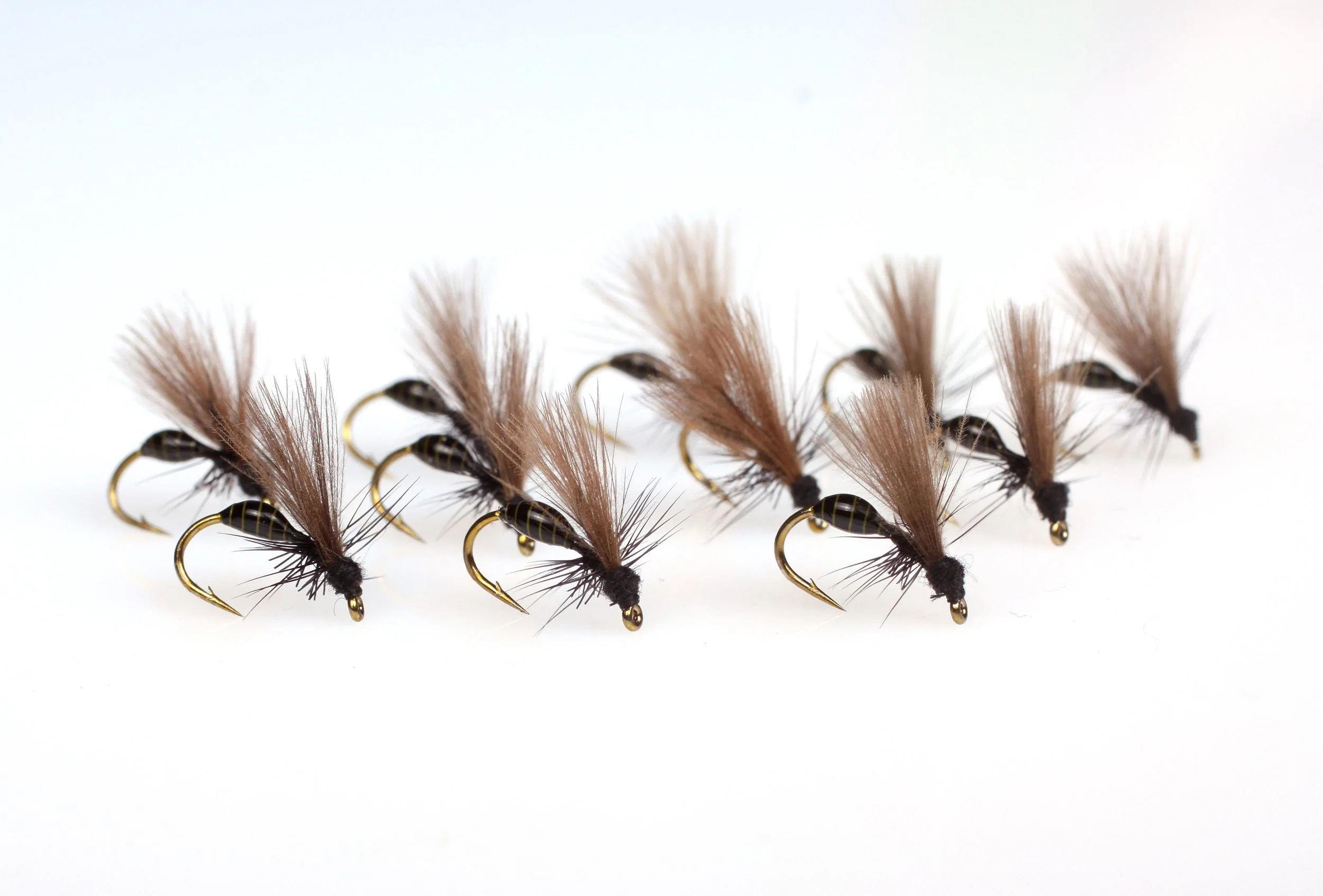
Glue Ant
If I should only have one dry fly for the entire season in both rivers and lakes this would be it. This fly in size 14 or 16 can fool most trout. As a generic fly or attractor it’s super to fish along the banks of a river or lake where insects fall out on the water now and then. For random risers it’s a huge favorite, during swarming’s its essential.
Hook: TMC 2487 size 14-16(18).
Thread: I use UNI 8/0 in black to make the abdomen and a thinner like veevus 14/0 for the rest.
Rib: UTC Wire X-small olive.
Hackle: Black cock. Don’t cut hackle under all short, leave 1mm or 2.
Wings: 2 nat Brown cdc feathers.
Thorax/Head: Black Superfine dub.
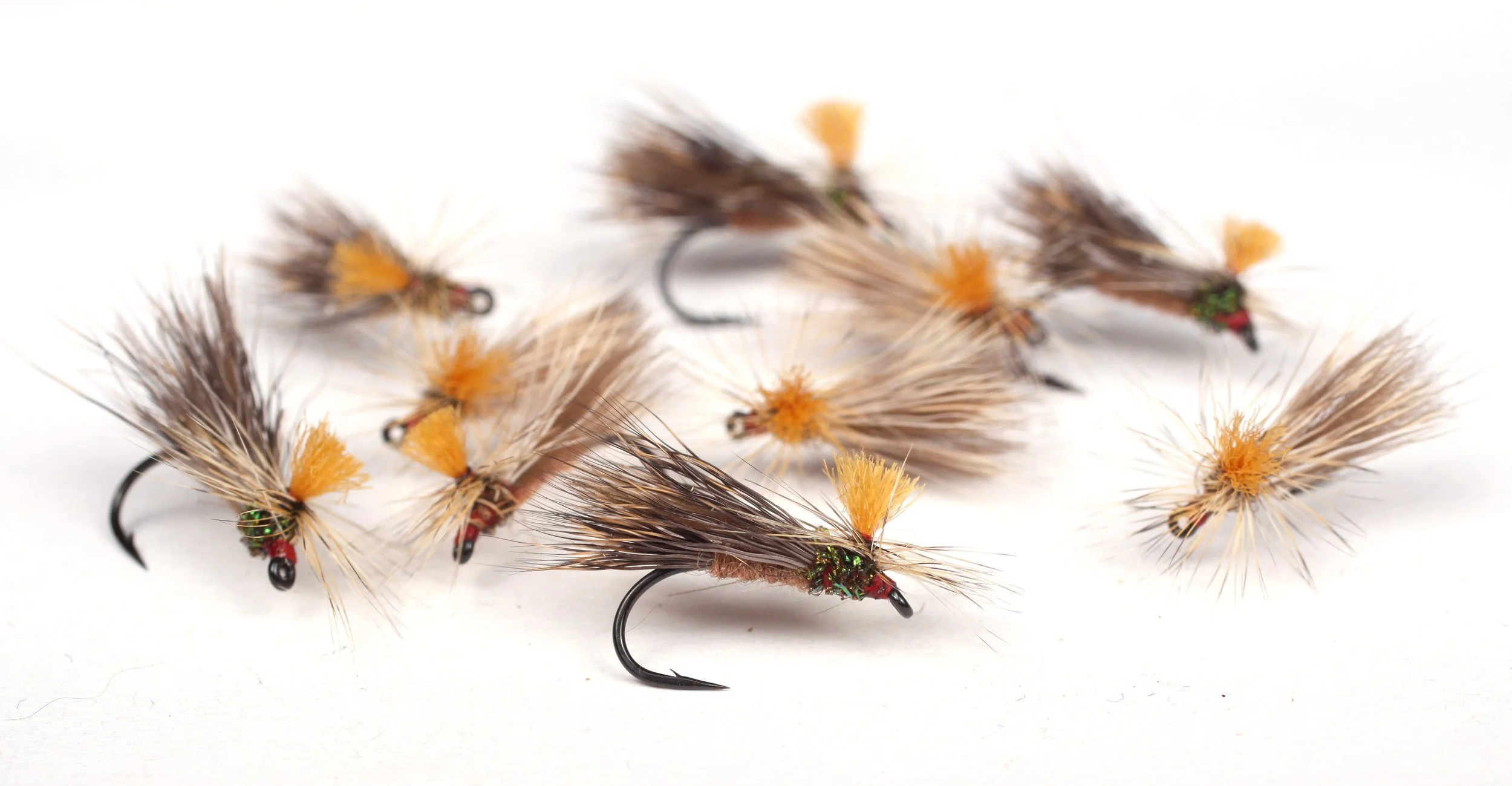
Dropper Caddis or Paracaddis
Caddisflies are around all summer and this fly is also a great pattern to use when you fish dry & dropper. The way the wing is tied plus the parachute hackle makes it a great pattern to move on the water too. When you fish this fly dry & dropper, it’s a good idea to have the caddis on a dropper tag on your leader as its quite likely that the fish will take this fly too. And with a dropper tag instead of “truck & trailer” setup you will hook more fish.
Hook: Favourite here is Ken Sawada DD1 size 12-16.
Thread: Uni 8/0 in brown.
Tail: Roedeer hair.
Body: Flyrite nr 20, Dark Tan.
Underwing: 1 decent natural brown cdc feather.
Over wing: Roedeer hair. (it’s also very nice with pardo fibers).
Parapost: A visible polyyarn, I use yellow and orange.
Hackle: Brown or posh like here = Cree.
Thorax: Peacock dub, spectra is nice.
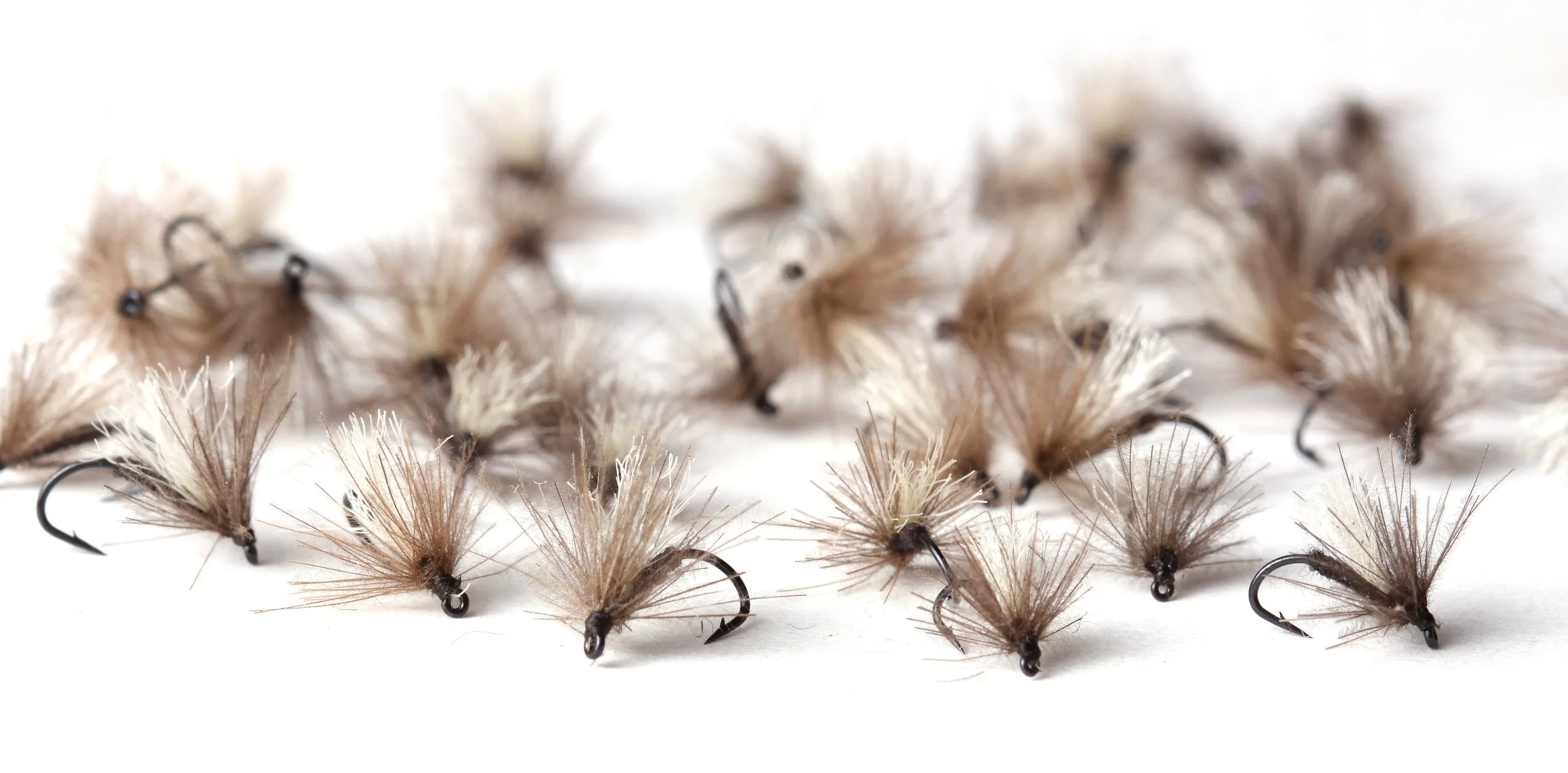
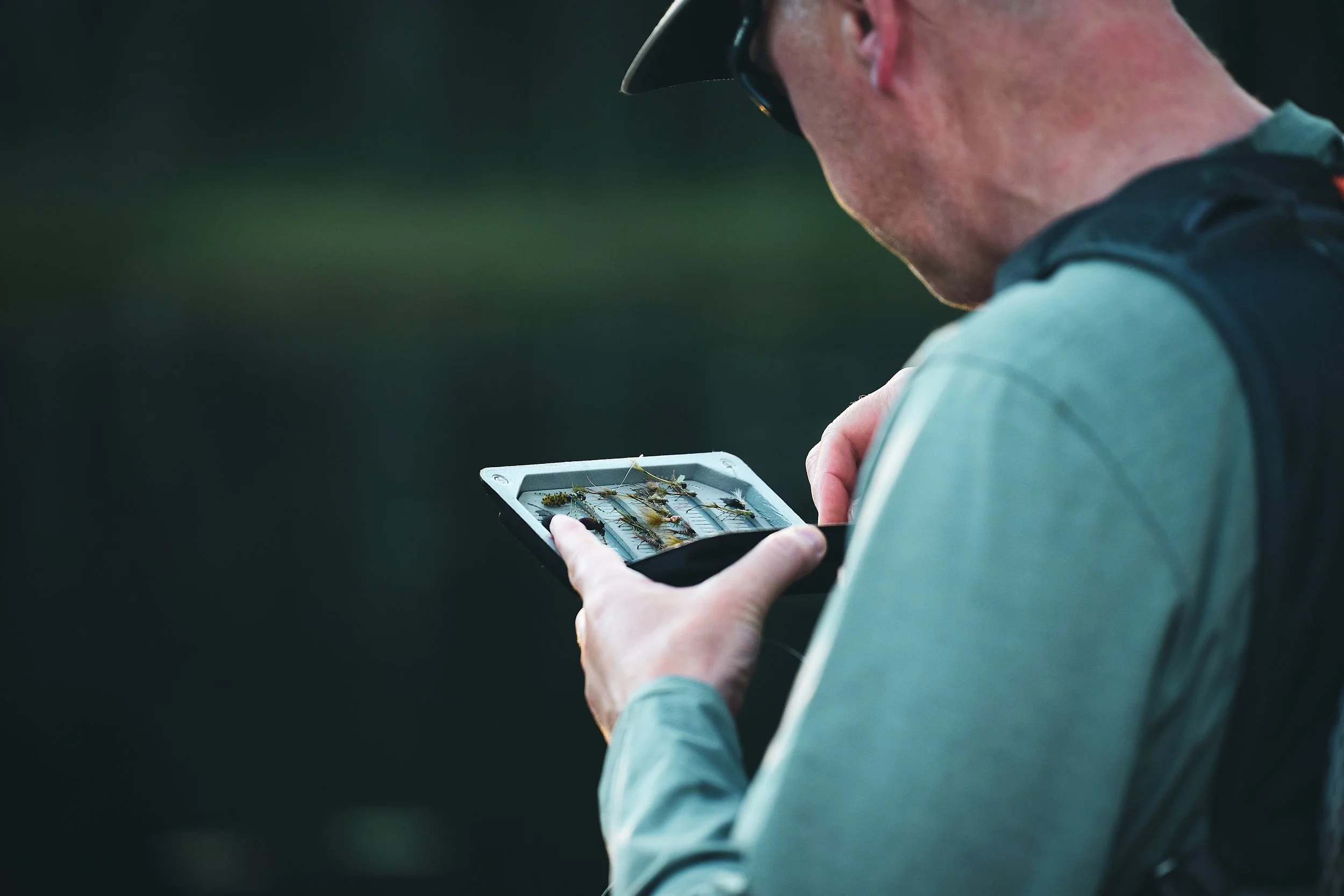
The CDC Midge
This fly has been with me since late 90-ties, a fast and easy tie once you get the technique with spinning the cdc hackle. Seleting cdc is very important, use fibers that look and feel “stiff” this float better and is easier to refresh after a fish. The fly is a midge, or any kind of black fly and sits very nice and light on the water. It can also be a cluster of several midges in the larger sizes. It’s a great fly for selective fish that pick small suff at the surface.
Hook: TMC 102Y size 17-21.
Thread: Black, thin one. I use GSP in 20 denier (technical doping) for smallest ones.
Body: Black Superfine dub.
Wing: Tan or White polyyarn, get a type that is stiff and not to curly fibers.
Hackle: Natural Brown or wild mallard (dk grey) CDC spun in loop.
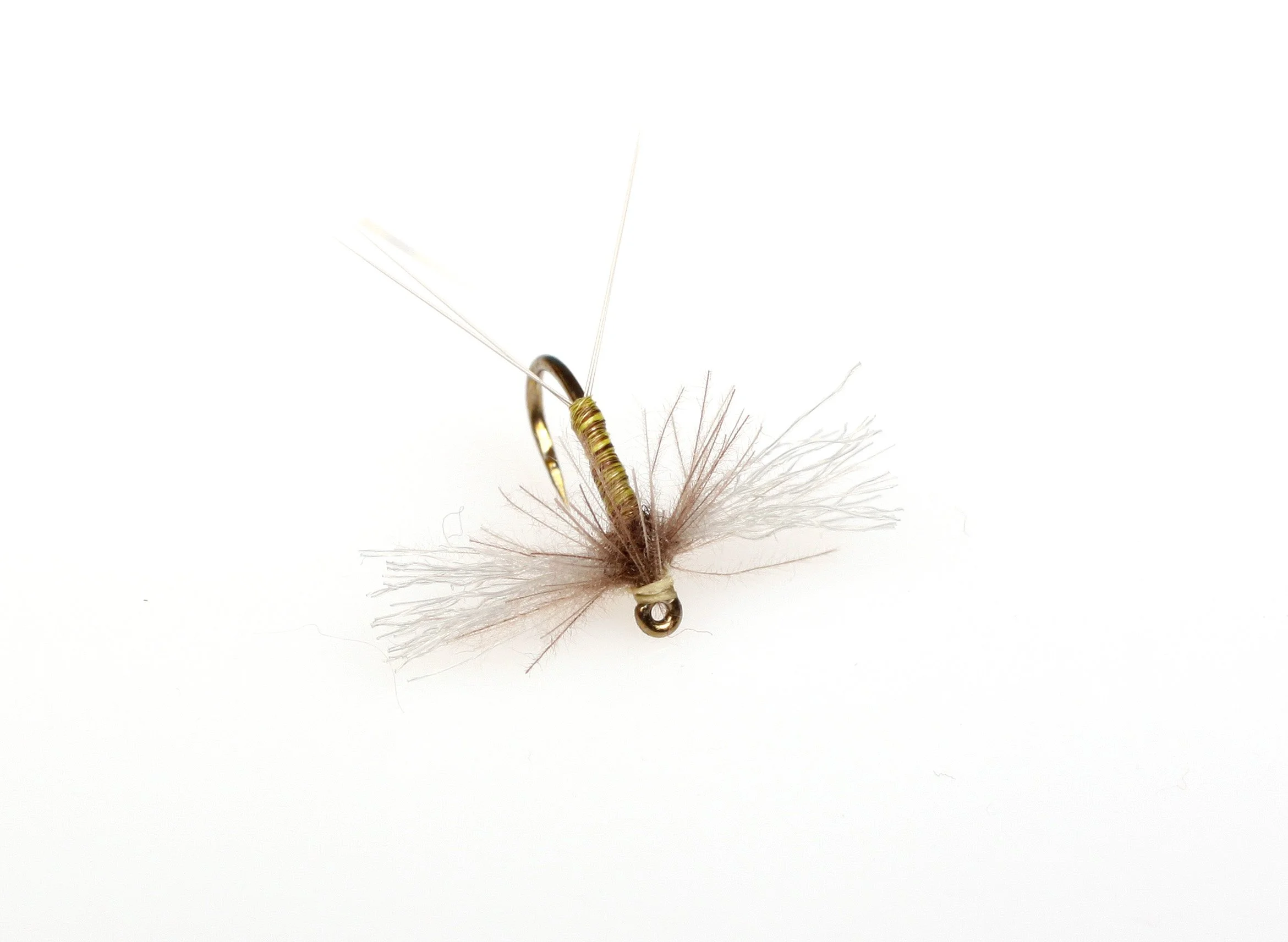
Cdc Spent “Dun”
Trout loves an easy prey and cripple mayflies or spent dun’s is exactly that. This Fly I tie in colors to match smaller duns in size 16-20. And it has saved the day several times. For the wing, find some nice material that has a nice sparkle.
Hook: TMC 921 size 14-18 (this hook is small in the size.) or similar sizes 113BLH.
Thread: Here a lt.cahill veevus.
Tail: 4 fibetts.
Body: Flyrite nr 34.
Wings: Stiff polyyarn, organza..
Thorax: Natural brown cdc spun in loop and wrapped like a hackle.
9. Presentation and drifts.
Picking the moment of presentation is often the key to success. It’s about when to cast to the fish based on what you have seen. Watch the frequency of the rises and decide when its time. I find myself more in situations where trout rises all other than steadily. Which mean that a fish can all sudden rise for a few times and then switch off. Too many times I did not react in a timely manner and waited too long before I did my try. These odd rises is not only when trout have few naturals to pick, no sir! It can also be that the fish switch between picking adults on the surface, then over to taking nymphs. It could also be that the fish is patrolling the area. Bottom line is that I now, more than before, try to decide quickly what to do and make my move before its too late.
The drift, well most of us think of a dead drift with no drag as the typical choice and plan our cast and presentation after that. It’s a safe and stealthy option that spook less fish and the normal way to do it. Show the fly to the fish before anything else. However, now and then a “twitch” or small movement can be more productive. Trout that is heavily fished, sees a lot of flies and they can change behavior to taking naturals that move instead of those sitting still during their drift. This also goes for mayflies, I have seen trout that was taking flies that were fluttering with their wings. And let the ones sitting still with their wings up pass by. Give the fly some life one meter or so before it comes over the fish can be a trigger that solve it.
10. Upstream or downstream?
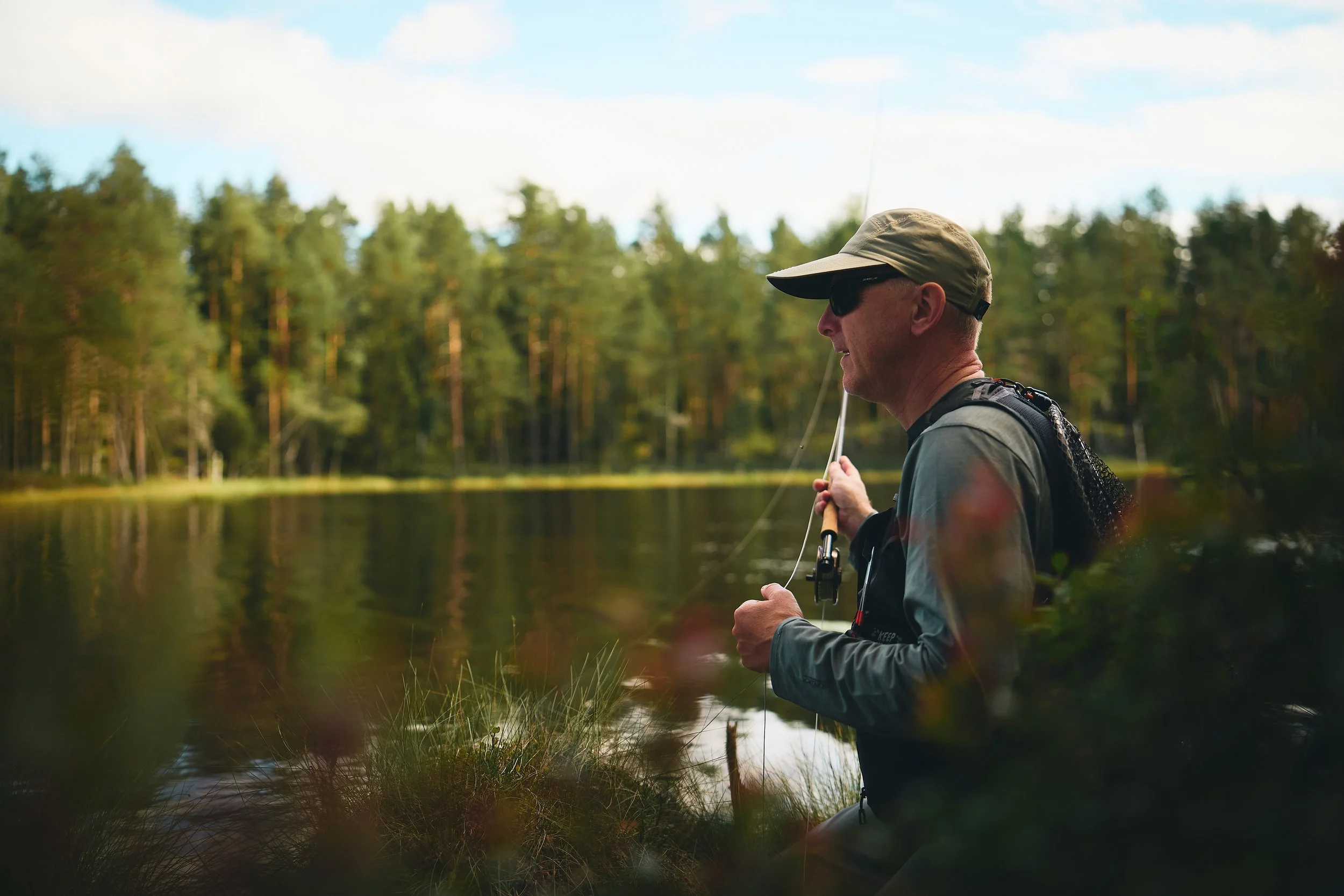
In which direction I walk is determined by several things, moving upstream is easier because we in most cases can follow the bank and look for the fish without spooking them. Besides that i would say that presentation/casting wise to show the fly first is the best tactics if you want to play it safe and for most of us in the long run spook less fish. I think that the situations we end up in the answer gives itself. But there are times when we can select and wade into position without risking our lives. For me upstream is most fun, I love to sneak up on fish, as far as I can before I present my fly. Ideally, I will see it in the water, this is crème de la crème. In such a situation you have a lot less room for errors and your presentation must be delicate and nice. Ideally the cast will come in a little from the side, so you don’t have to drop the leader onto the fish’s lie. But that works too if the water is not too flat and clear. And I think this is the key, don’t let a lot of line float over the fish, come in from the side, show the fly first and then you are most likely good with that part.
There are places where the water is slow, typically big wide and open areas. Then, it’s time for me to fish downstream with long drifts. Remember the stealthy advice, don’t show the line, don’t show the false casting, distance the impact from the fly line. A long leader spook less fish.
11. fighting fish.
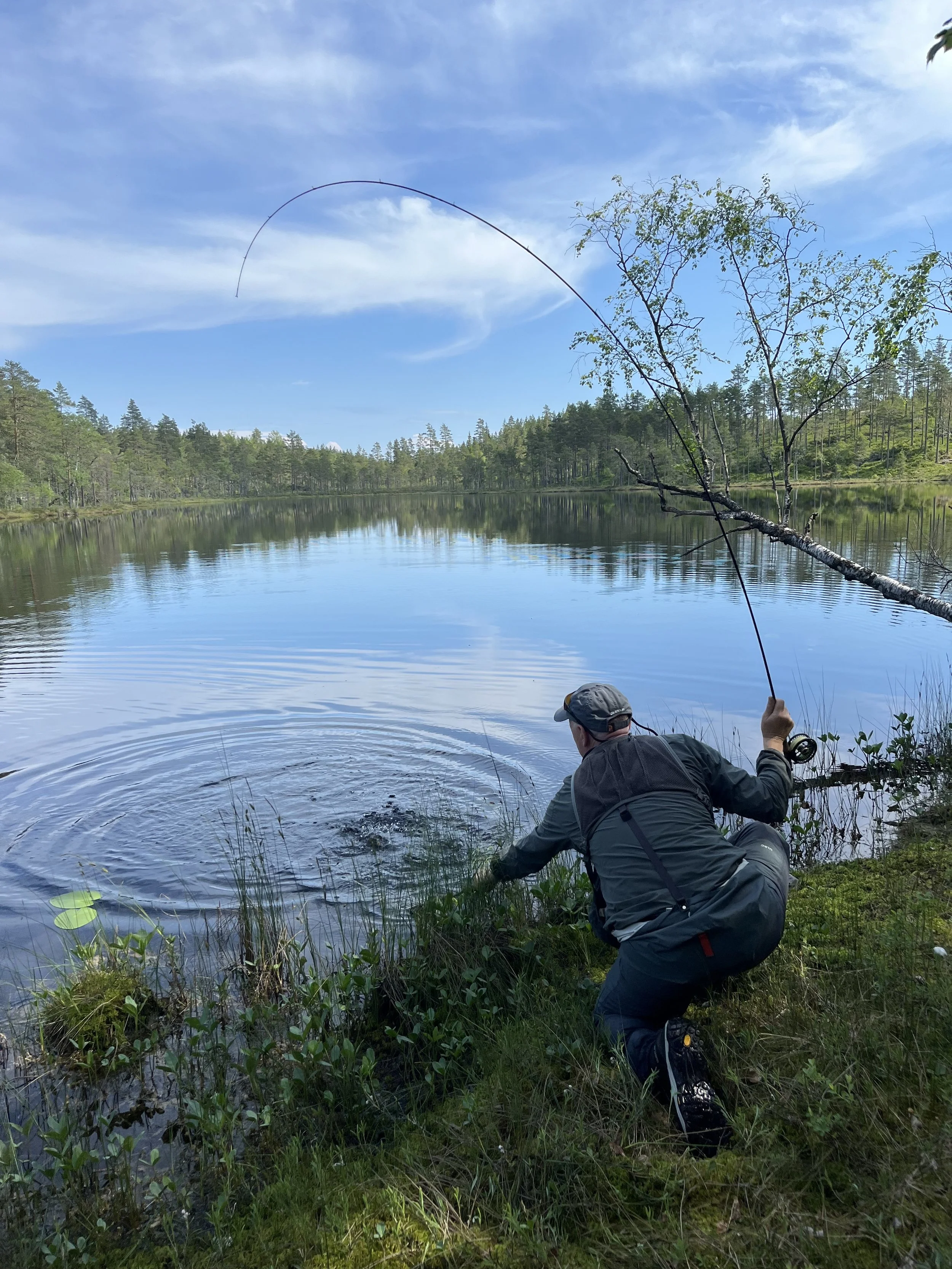
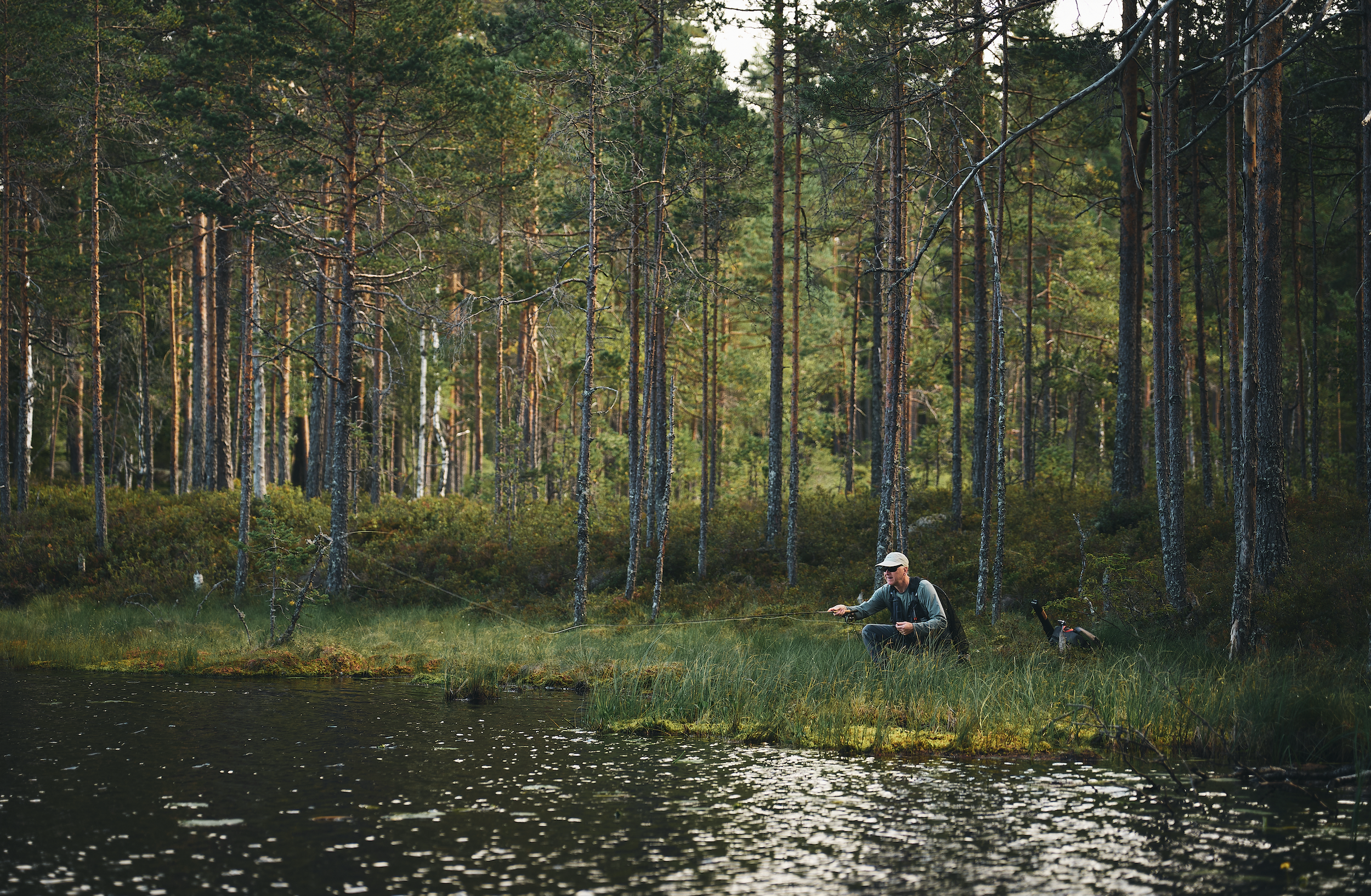
Well, I find fighting fish rather boring, it’s fun for a minute then they can just drop in my net and I’m good. Of course, I get excited when the fish put on a lot of commotion but the joy for me is the take and all that happened before that. I think it’s very important to have a good feeling for how much the gear can take before you lose the fish due to small fly/unsecure hold or break the tippet. Playing the fish hard and firm is a good thing to avoid the fish to build up lactate, so that the fish recover as fast as possible.
The fight it’s self consists of 3 different stages; Hooking, playing and netting. In the hooking stage I try to be on high alert and ready to parry any dramatic things the fish might want to do. This means having the rod in a quite high position and letting the shakes from the fish hit the top part of the rod for det best protection of the tippet. Then after the few critical seconds is over i like to put pressure, now its time to let the rod work and put the rod sideways/more horizontal so I get the bottom part of the rod engaged. Putting side pressure also makes it easier to steer the fish in the direction you like. And changing from side to side can make them very unsure about what to do and that is to your favour. If you pull consistently without the rod bouncing the trout tend to get less scared too.
When the fish is ready for the net, I go back to a more defensive angle of the rod. The last stage when you play the fish with only the leader outside the guides can be very critical and you need to be prepared for whatever the fish try to do. So keep the tip up and make sure those hard head shakes is absorbed by the upper parts of the rod. I also tend to loosen the brake so that fish can escape without too much force. If you fish in a river, let the current work for you, in the netting stage don’t try to pull a big trout against the current to your net. Try to wade below the fish and push it down towards you. I have broken tippets because of this and I have seen many other broken.