Christoffer Pilegaard
1. Rods, reels, fly lines, fly floatants, clothes, glasses, and other useful items.
RODS
I should probably start by saying that I’m likely not good enough at casting to deserve an expensive and “good” rod. I also fish exclusively with dry flies, so all my opinions related to the topics here should be read through dry-fly eyes.
Even though I’m a completely mediocre fly caster, I’m still like many others in that I feel something special when casting with a more expensive rod. At the same time, it’s obvious to me that it also affects the whole experience and the sense of humility when you’re casting with a rod that potentially costs a third of an average monthly salary. That said, the feeling you get from an expensive rod that’s actually worth its price is probably not random.
When I’ve cast with more expensive rods compared to cheaper ones, I’ve noticed that the components immediately feel better and create less line friction. The rod often gives me a clearer sense of control—you feel much more of what you’re doing, and eventually you’ll also start to feel what you’re doing wrong. The more expensive rods are usually more thoughtfully designed with guide placement optimized for proper flex throughout the rod. They’re often lighter as well (or better balanced), which makes them sit very comfortably in the hand.
My main argument for choosing a more expensive rod is the incredible feel when fighting fish, while also being gentler on thinner leaders. It’s not as “snappy,” if that makes sense. You feel everything all the way down into the cork, and that’s something I’m generally willing to pay a little extra for.
That said, I still think there are some cheaper rods that are extremely good, and it’s definitely no longer necessary to burn a hole in your wallet when buying a rod. You can get away with a reasonably priced rod that delivers on many of the qualities mentioned above.
I’m not sponsored by any rod manufacturer, so I can happily say that in recent seasons I’ve been fishing with a 5 weight 9ft Primal Revel. It costs just under 2500 NOK and, in my opinion, offers absolutely insane value for money. It meets almost all the qualities I want in a rod.
The downside of this type of rod—something that may be a dealbreaker for some—is that it can feel a bit sticky with a dirty fly line. Of course, that applies to most rods, but it tends to show up sooner with this one due to the guides.
REEL
Here I’m very simple. For me, a fly reel mainly stores fly line, and a drag system on a dry-fly rod isn’t hugely important. It should be smooth and adjustable, but most manufacturers provide that.
At the moment I fish with two reels: a Lamson Guru S 5+ and a VR Reels Trutta Perfetta made by the Ukrainian maker Vladimir Rachenko.
Both are great reels. The latter is a click-and-pawl reel and therefore has no adjustable drag. I mostly use the Lamson reel because it’s incredibly good, retrieves line quickly, has a large spool which reduces memory in the fly line, and allows you to pull line out quickly. Simple as that.
The VR Trutta is used more for relaxed fishing with a light 4 weight rod.
FLY LINE
This is a jungle, and you really just have to experiment and see what experiences others in the community have had.
I use both short heads and somewhat longer heads. One of my favorites is the Scientific Anglers VPT 2.0 because it works under many conditions and has matched well with most rods I’ve used.
It’s worth noting that if you feel your rod is too stiff or that something doesn’t feel right when casting, the most likely reason is that you have the “wrong” line for that rod. Changing the fly line can sometimes make it feel like you’ve gotten a completely new rod.
FLOATANTS
For me there’s only one king here: High N Dry.
It works perfectly and does exactly what it’s supposed to do. The fly floats—and often for a long time—without discoloring or damaging it in any way.
I mainly use the version where you dip the entire fly into the container, or the spray version so you can treat parts of the fly. The gel is also excellent.
CLOTHING
I mostly wear what I normally use in the woods: hiking pants, hiking shoes or boots depending on how far I’m walking, a flannel shirt or T‑shirt, or a lighter sweater—for example from SIMMS with bug‑stopper fabric.
I only use waders in late autumn or when fishing rivers.
The most important thing for me is that the clothes are functional, dry quickly, and are comfortable.
GLASSES
This is probably the thing I’ve neglected the most during my time as a fly fisher.
I think it’s largely because I’ve assumed polarized glasses weren’t that important since I mainly fish in small lakes and ponds and rarely in rivers. Spotting fish where I fish isn’t usually possible anyway.
However, I’ve become an increasing fan of good glasses—both for protection and for reducing glare.
Currently I use a pair from Smith (Guides Choice, ChromaPop+ with green lenses) which I’m very happy with. Before that I used Oakley Holbrook PRIZM with shallow‑water lenses. They were also good, but I found the fit a bit awkward.
Regardless, glasses are important and something everyone should use—if only for safety reasons.
OTHER
When it comes to storing gear—which can actually be one of the more challenging aspects of fly fishing (because let’s be honest, you carry a lot of stuff)—I’ve eventually found my way through the chaos.
A vest feels too claustrophobic. A chest pack gets in the way and feels too big. A hip pack is okay, but also always slightly in the way. I already notice this section becoming longer than I expected.
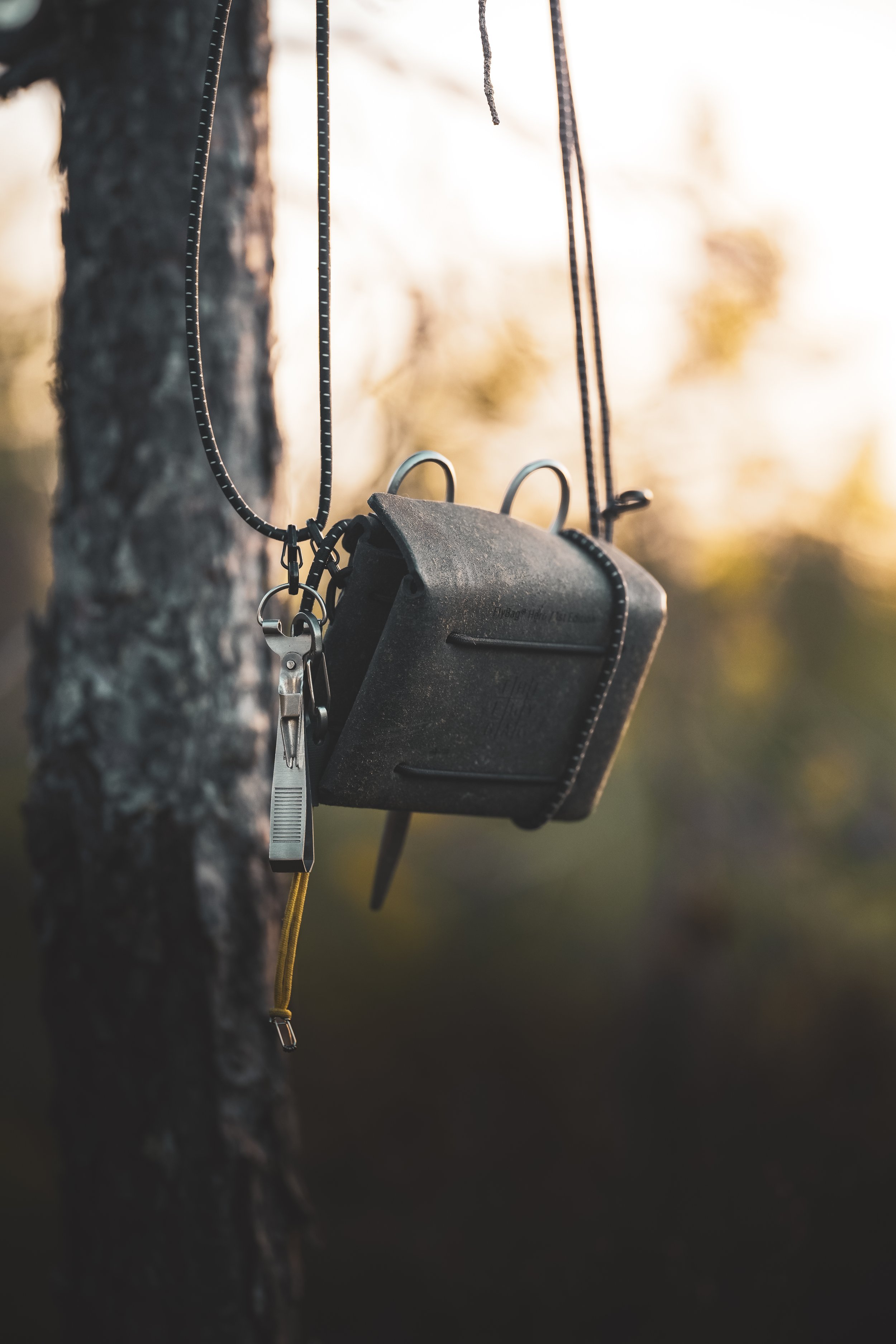
I was lucky enough to win a FlyBag Hero from the Swedish manufacturer FlyBag, led by Tobias Allanson. It’s a minimalist system that keeps everything you need easily accessible without taking up much space.
For someone who mainly fishes with five types of flies throughout the season, it feels like a complete waste to have nine fly boxes readily available. I’d recommend anyone looking for something better than what they currently have to check out https://shop.flybag.fish/en.
I use it for flies, forceps, and nippers. My floatant and tippet material are stored in a pocket that’s easily accessible, since I always carry them in the clothes I’m wearing.
As for additional gear—extra fly boxes, more leaders, extra floatant bottles, and other items—they’re stored in a separate pocket in the backpack I carry. On this backpack I have a magnetic net holder so the net is easy to reach.
This is about as simple as I’ve managed to make it. The backpack has to come along anyway since I carry a camera, food, drinks, possibly a stove, maybe an extra sweater, and so on.
The backpack I use needs to be light and comfortable. In bad weather or when fishing rivers I use a Fishpond Submersible backpack because it’s waterproof, holds a lot, and is comfortable to walk with.
If it’s dry and nice—or just a normal day in the woods—I use a Fjällräven Abisko Friluft 45L.
Choosing the latter (the one I use by far the most) is not random. It has side pockets with tightening straps that fit rod tubes and water bottles perfectly. It has zip openings on both sides leading into the main compartment, making it easy to access gear even if you carry a lot, like cookware and other camping equipment.
It’s large but still light, which makes it very versatile since trips often vary between short and long outings. It also has many good pockets of varying sizes, making it easy to develop your own system.
An extremely important factor for me—since my back gets very warm when carrying a backpack—is that this one has an excellent ventilation system, so it never feels clammy.
As you’ve probably realized by now, I’m a bit of a particular guy with what many would consider demanding preferences. But that’s probably true for most fly fishers in one way or another. You want a system that ensures you bring what you need in the easiest and most organized way possible.
2. Leader material, build‑up, length and knots
I keep this very simple: Trouthunter all the way.
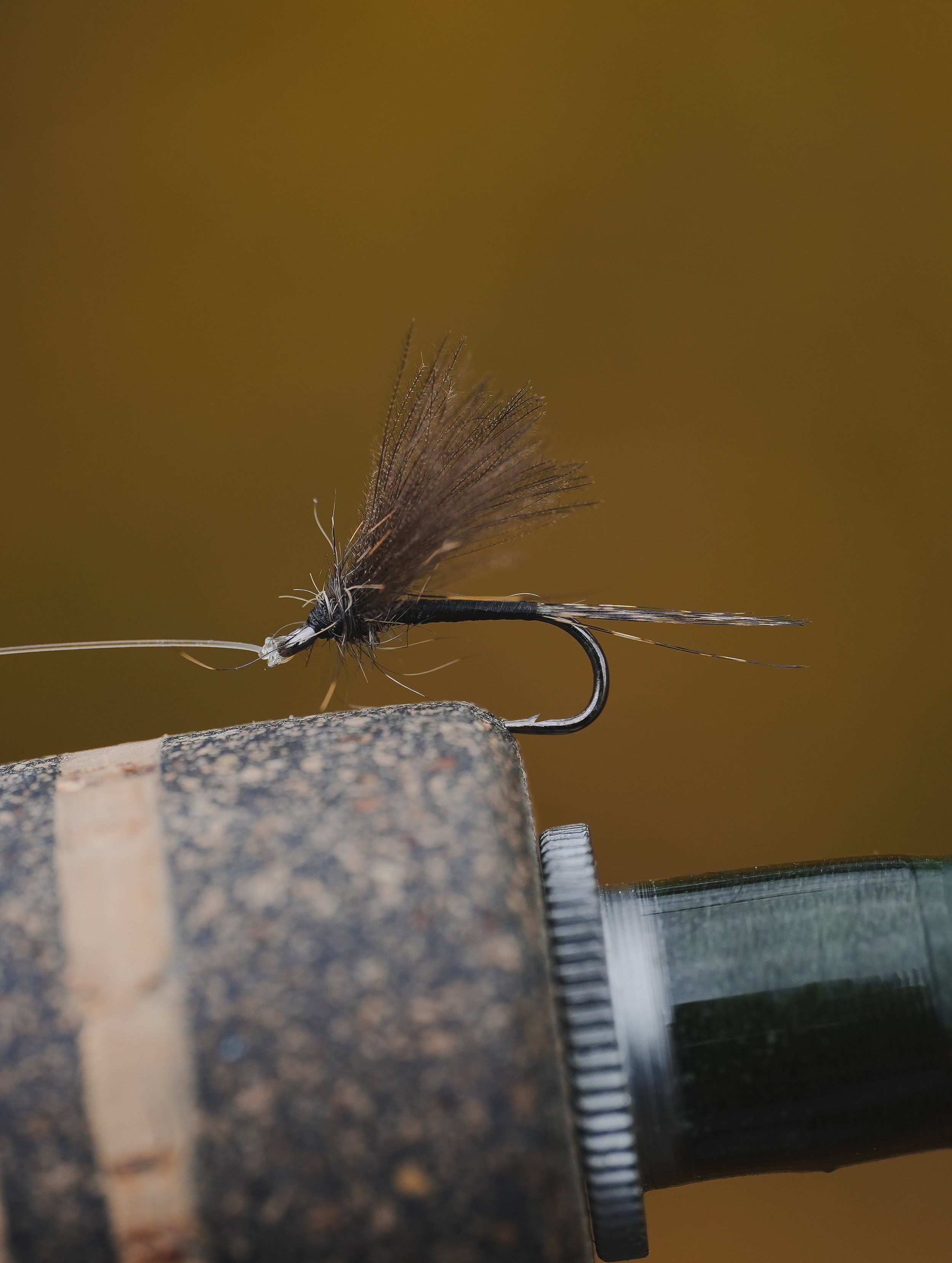
The leader is a pre‑tapered Trouthunter Finesse 12 ft in 0X, followed by a small tippet ring. From there I taper down with Trouthunter fluorocarbon tippet in 4X, 5X or 6X depending on what I want. I am aiming for a total length of tippet that’s approximately two times the length of my rod.
This results in very few knot points in the entire setup.
I learned this from a friend I call Josefsen. Before I did it like this I used to build more sections into the leader: a pre-tapered leader down to 4X or 5X, then a tippet ring, and then the desired tippet size. But I struggled to properly turn over the flies and ended up with a lot of tangles. I also had more knots and that meant more room for error.
This works so smoothly and flawless for a mediocre fly caster like myself that it almost feels too easy.
The knots I use are:
From fly line to leader: a uni knot with only two turns instead of five or six. This holds perfectly well since it’s the thickest point of the leader, so it won’t break. It also makes a small knot that slides easily through the guides.
From leader to tippet ring: a double clinch knot.
From tippet ring to fly: a double Davy knot.
On the fly: also a double Davy.
The double Davy knot is small and very strong, so I rarely break fish off even though I often bring fish to the net quite firmly and through lily pads and similar vegetation.
This is important to me because I don’t see much point in playing fish purely for fun.
3. Approach and stealth
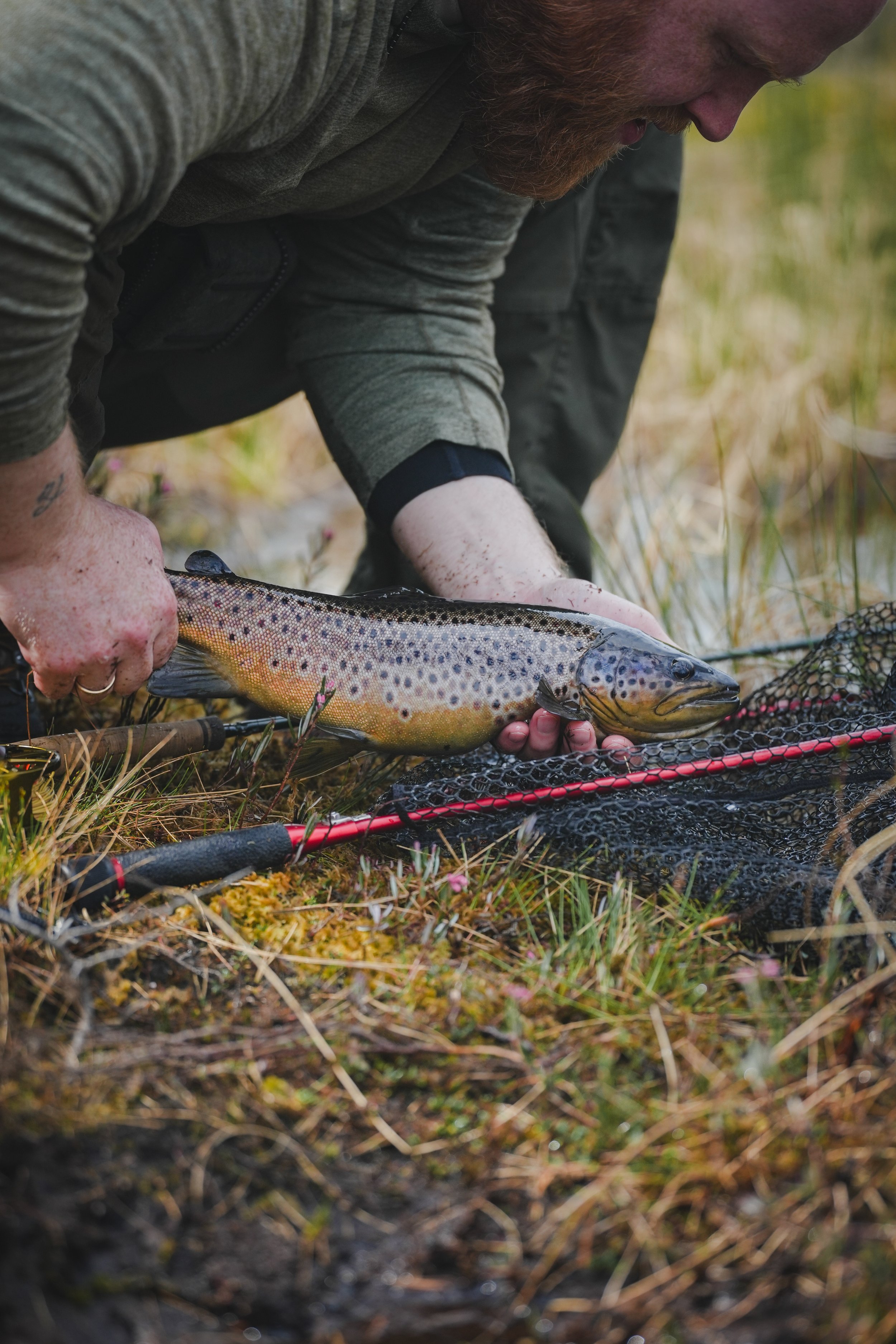
Over the years it has become an undeniable fact that being calmer by the river or lake has resulted in significantly larger fish and many very intense fishing situations at very close range. This has led to experiences where only the leader is outside the rod guides and you are extremely close to the entire situation.
Previously I was more the type who was always in a hurry, casting at anything that moved and generally being much more impatient. I’ve learned to appreciate a careful approach, as it has also given me chances at larger fish that haven’t been spooked by clumsy behavior along the shoreline or riverbank. It has made my fishing more fun, more exciting, and far more interesting.
4. Reading the water
I have a philosophy that you cannot determine the size of a fish based on the rise, unless one of two things is present:
A clear view of the whole fish, either in a river or lake, with or without polarized sunglasses
A clear head-and-tail rise
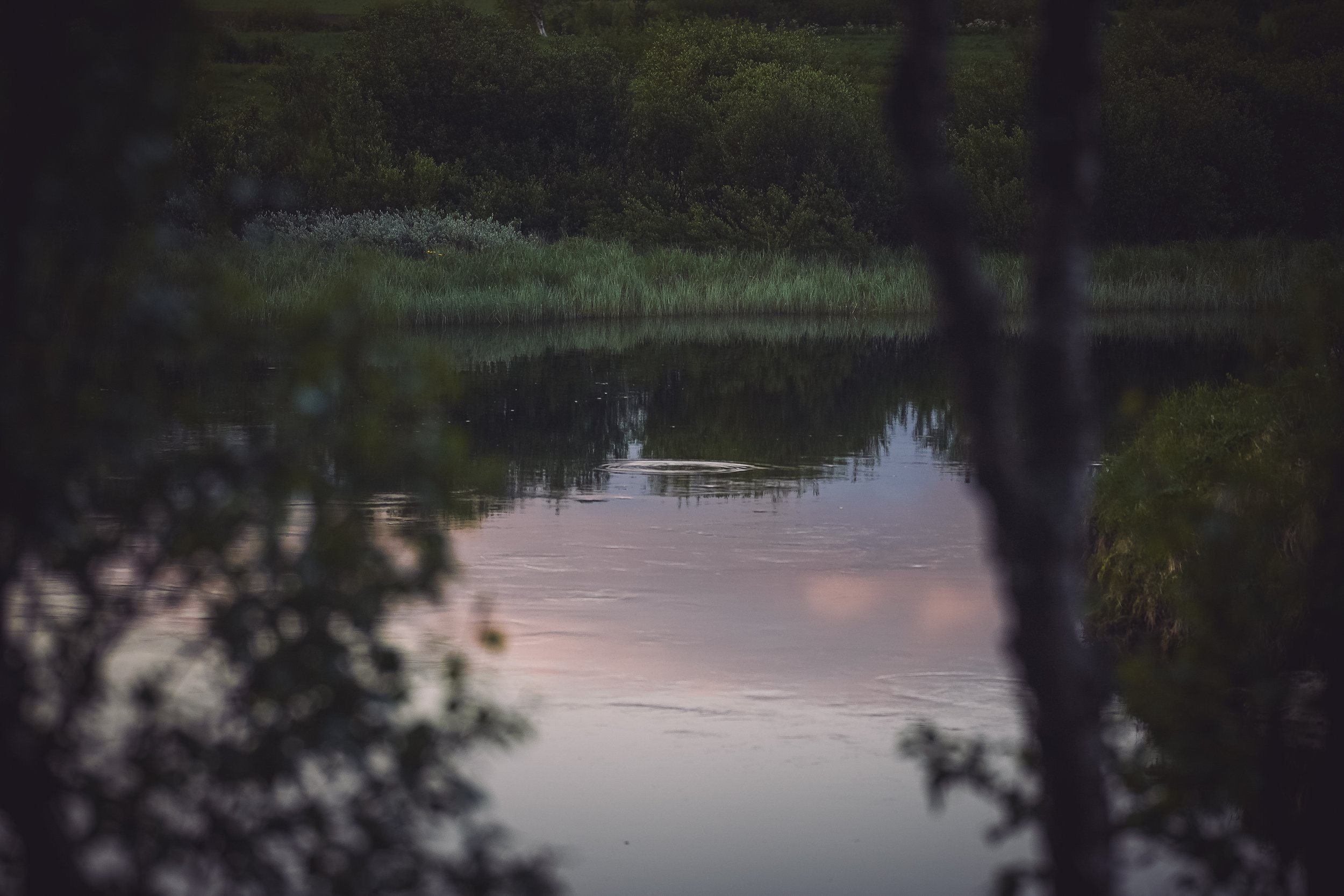
The small rings that you might easily dismiss as small fish or something insignificant have actually, in my experience, often been the situations that have given me the biggest fishing experiences. Simply because I assumed it was a small fish since the rise was barely visible.
When your fly disappears in such a rise and you feel sweet resistance on the other end that doesn’t immediately give in, that’s a rare and pleasant surprise that always fills me with enormous anticipation and excitement.
As for reading water in general, I’m honestly well below average at interpreting currents, seams, back eddies, and rivers overall.
I’m simple in that sense: I mostly search for rises. And if I simply feel that a place must hold fish, I might sit down, pull out my camera, take a few photos, and enjoy the surroundings a bit.
If nothing happens (assuming the conditions are right), chances are I’ll move on.
Since I’m not particularly skilled at reading water, I won’t offer many tips here other than recommending that you fish most rises unless you clearly see the fish jumping and can tell it’s small. But take your time—this increases your chances of gathering more information about the rise form, direction, type of insect, etc.
6. Entomology
Big question, and it’s difficult to give a “correct” answer, but I’ll try to elaborate on my thoughts.
My opinion is that how much entomological knowledge you possess about insects relevant to dry-fly fishing is actually somewhat irrelevant—but hear me out.
It’s important that you know something, and I believe you make things much harder and less enjoyable for yourself if you don’t care about it at all.
What I mean is that whether I know the exact name of what’s hatching, whether I can distinguish an Ignita from a Rhodani, a Danica from an Aurivilli, a stonefly from a caddisfly, or a Bibio from an Empis borealis is completely irrelevant.
What actually matters, in my world, is that I can observe what’s happening on the water, try to determine what the fish are eating, see whether more insects are hatching, and evaluate the size and stage of the hatch.
If I know the fish just rose to a crane fly, and I also happen to know from the species database that it was likely a Cylindrotomidae, that knowledge isn’t what catches the fish. What matters is whether I can find a fly in my box that resembles the insect buzzing in front of me and that the fish most likely just ate.
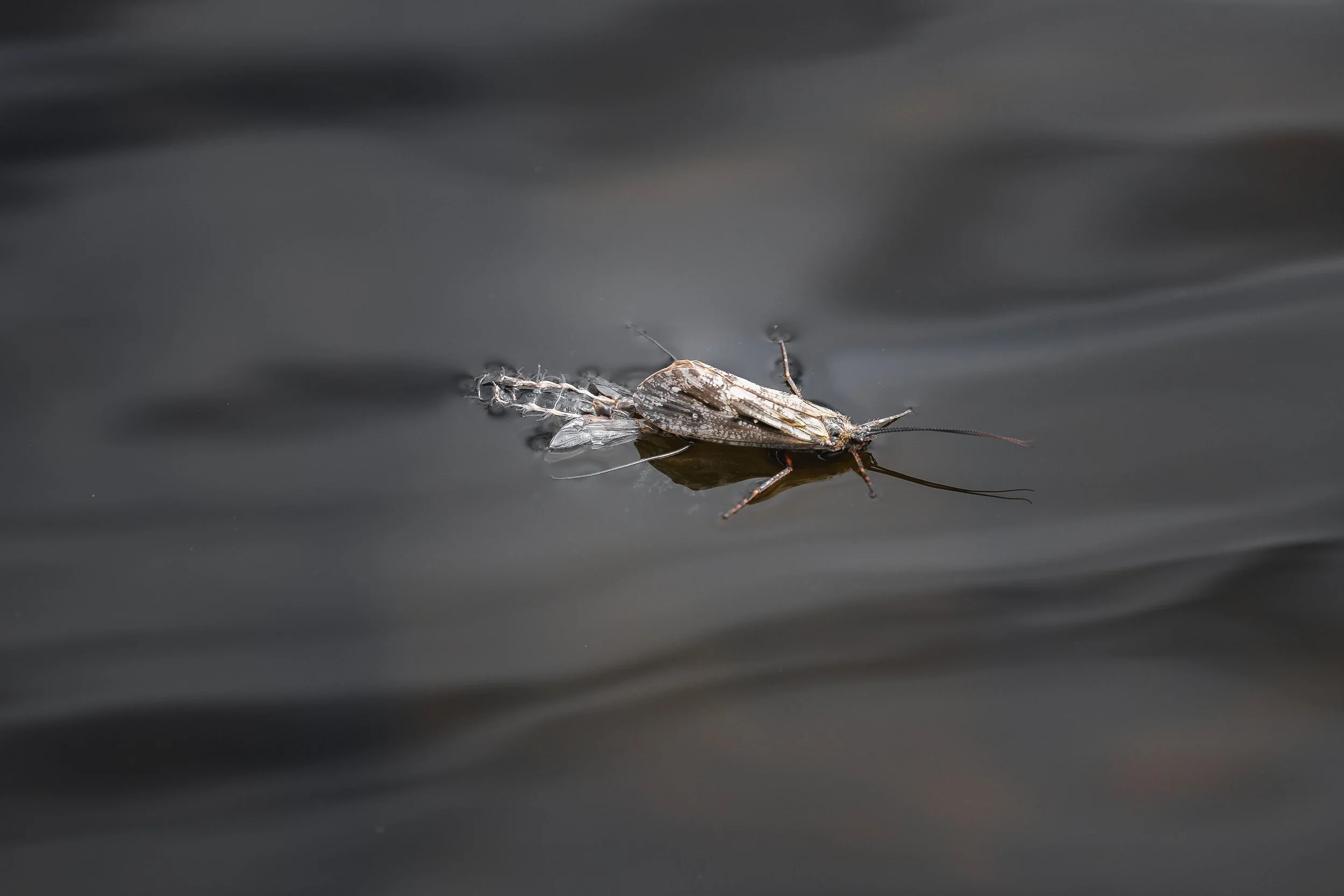
To clarify: there is absolutely nothing wrong with knowing all this. However, I sometimes get the impression that many people prefer to use such knowledge in social settings or on social media rather than when standing alone in a river trying to fool a trout feeding on size-16 mayflies.
If you ask me, local knowledge about what insects look like where you fish is more important than knowing what they’re called or whether they have two tails or small hind wings.
What I’m referring to is size, shape, and where in the emergence cycle the fish seem to prefer the insect.
That said, there is something incredibly admirable about people who dive so deeply into their interest that they can effortlessly distinguish many different insects, know their names, family trees, life cycles, emergence methods, number of gill plates, wing color patterns, tails, and so on.
You simply have to take off your SIMMS cap and bow in tying dust to that level of dedication.
It’s deeply inspiring as well, and I love that some people go that deep into the subject—even though I believe it’s not necessary to catch fish.
Even if it’s not necessary to know the names, I still prefer to use them when talking with other fly fishers.
I’m a nurse and have worked as one for many years, most recently in intensive care. There we used a lot of Latin terminology for everything from body parts to locations on the body relative to other parts, diseases, and pathological responses.
It wasn’t because it sounded cool or showed how skilled you were. It was simply more precise than everyday language.
In the same way, fly fishing becomes more precise when using specific names that can’t easily be misunderstood. If you say “Rhodani” to another fly fisher, they may immediately understand the situation, instead of you just saying “a mayfly hatch.”
What’s better than being precise and clear? Not much.
7. Rise forms
I feel like I’ve already touched on this somewhat, but one rule of thumb I have is:
If I see bubbles, I “know” it’s taking dry flies.
If I don’t see bubbles, I assume it’s a pupa or something right in the surface film, so a hanging emerger might be preferable.
With head-and-tail rises, I think the fish are feeding on insects they have plenty of time to eat—possibly dead insects or mosquitoes sitting on the surface.
The same goes for subtle “head rises” where you only see the fish’s head.
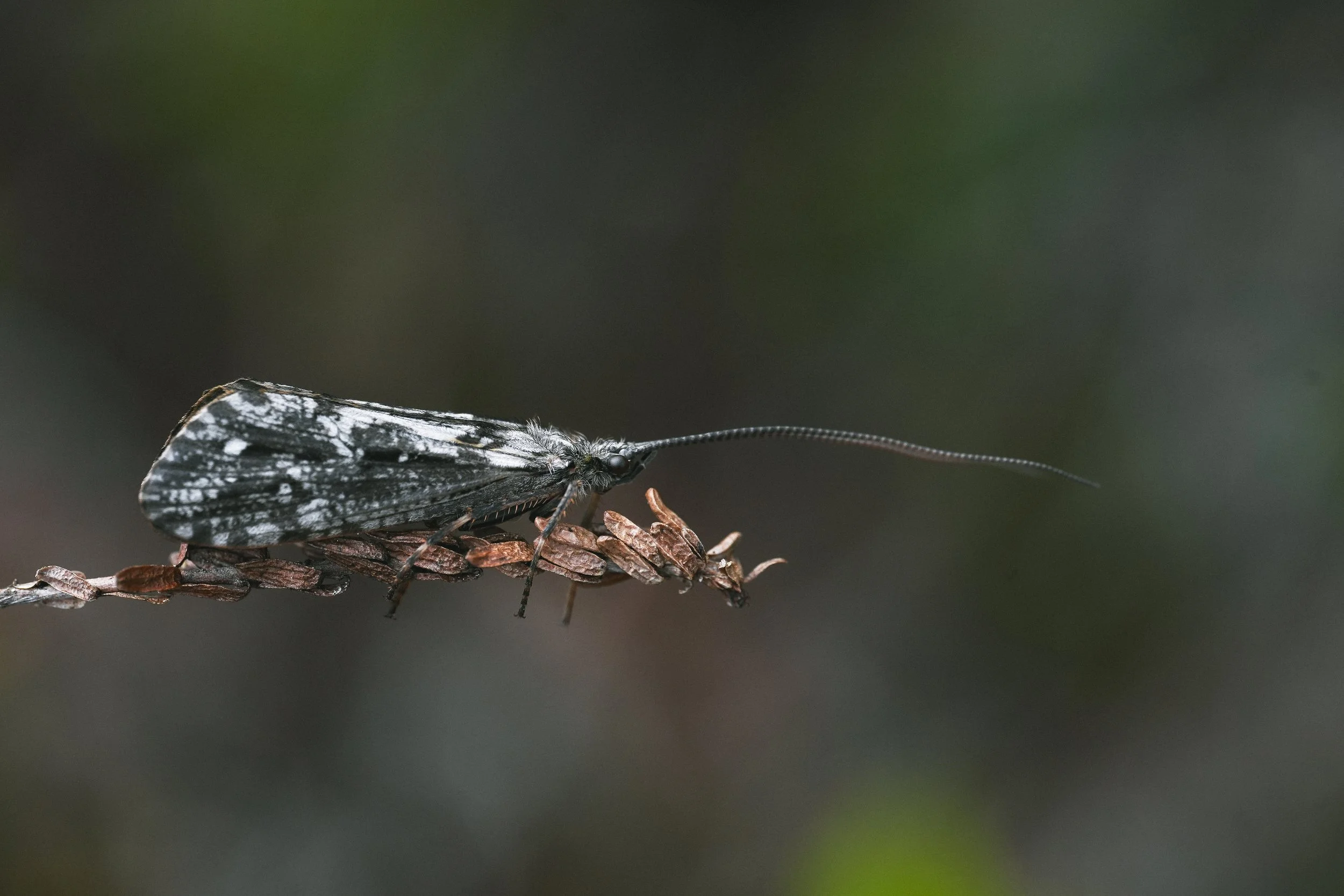
Noisy rises or fish that jump make me think of fast-moving insects like ants, crane flies, dragonflies, or caddisflies.
This is obviously a very simplified view of reality and of the evaluation process at the water. There can be many exceptions.
8. Fly selection
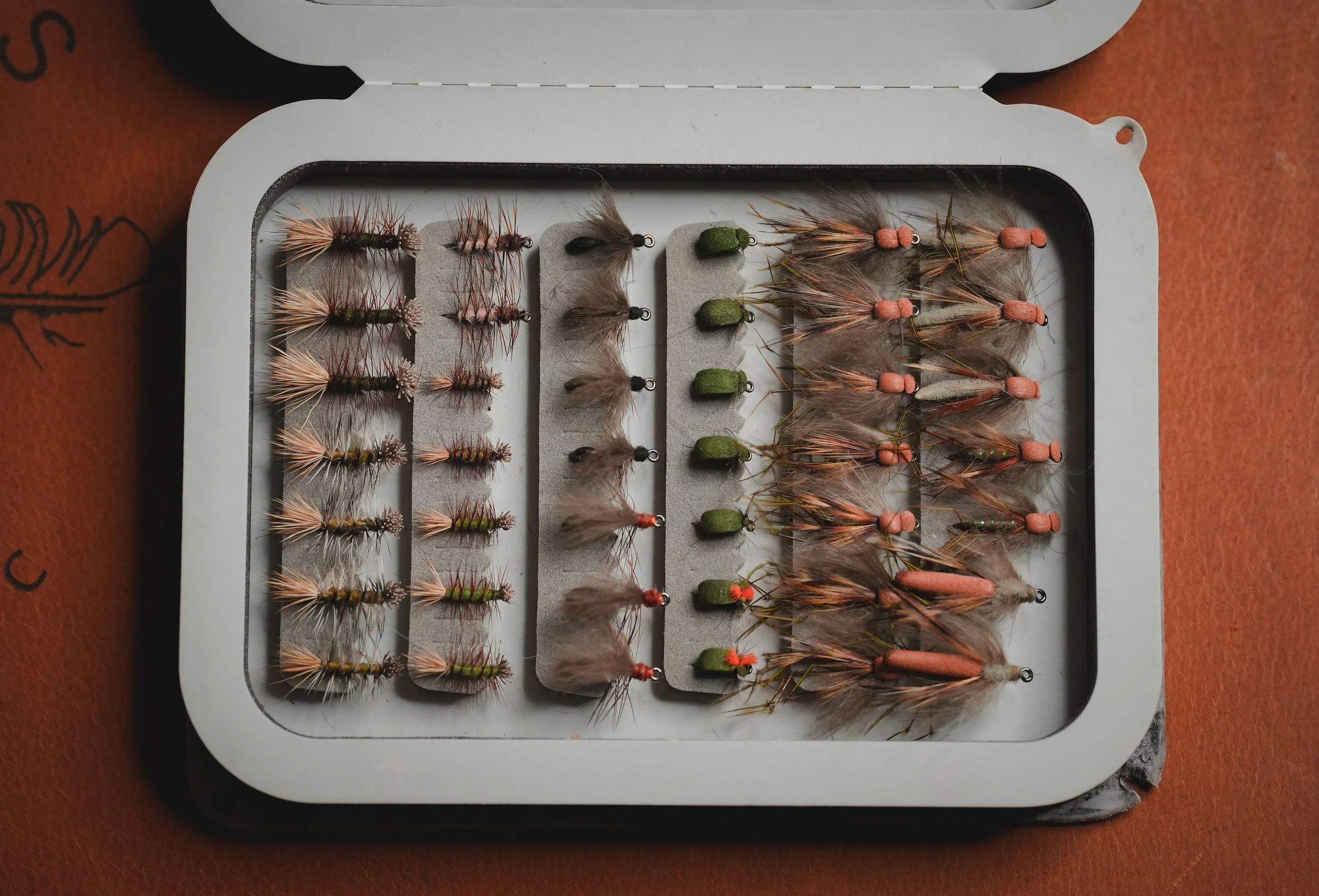
My fly collection is relatively small despite the fact that I operate with three fly boxes in total.
Two are CF boxes and the previously mentioned FlyBag Hero that I wear around my neck. In the one around my neck I have around 15–20 flies—the ones I use the most.
There are really only six patterns:
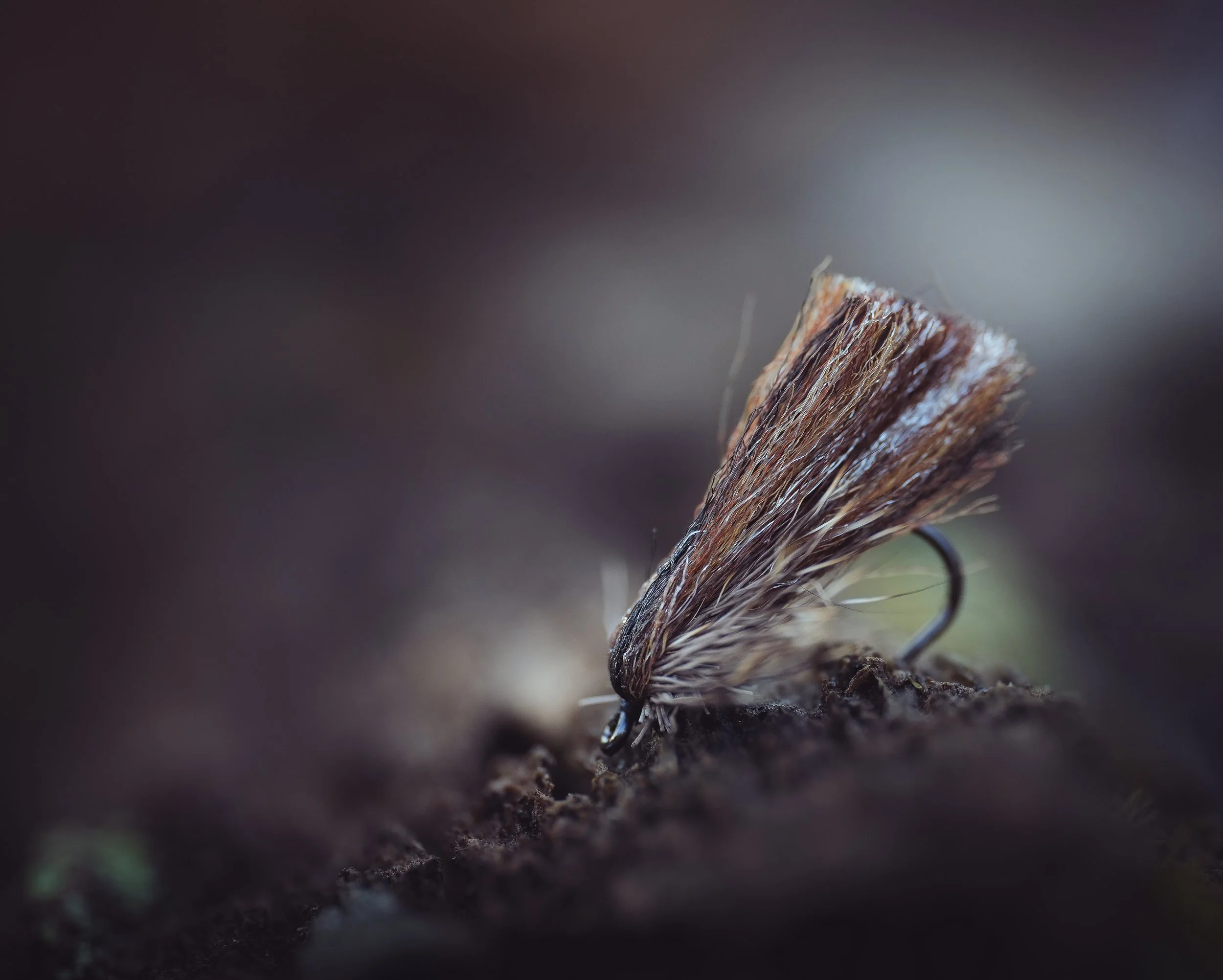
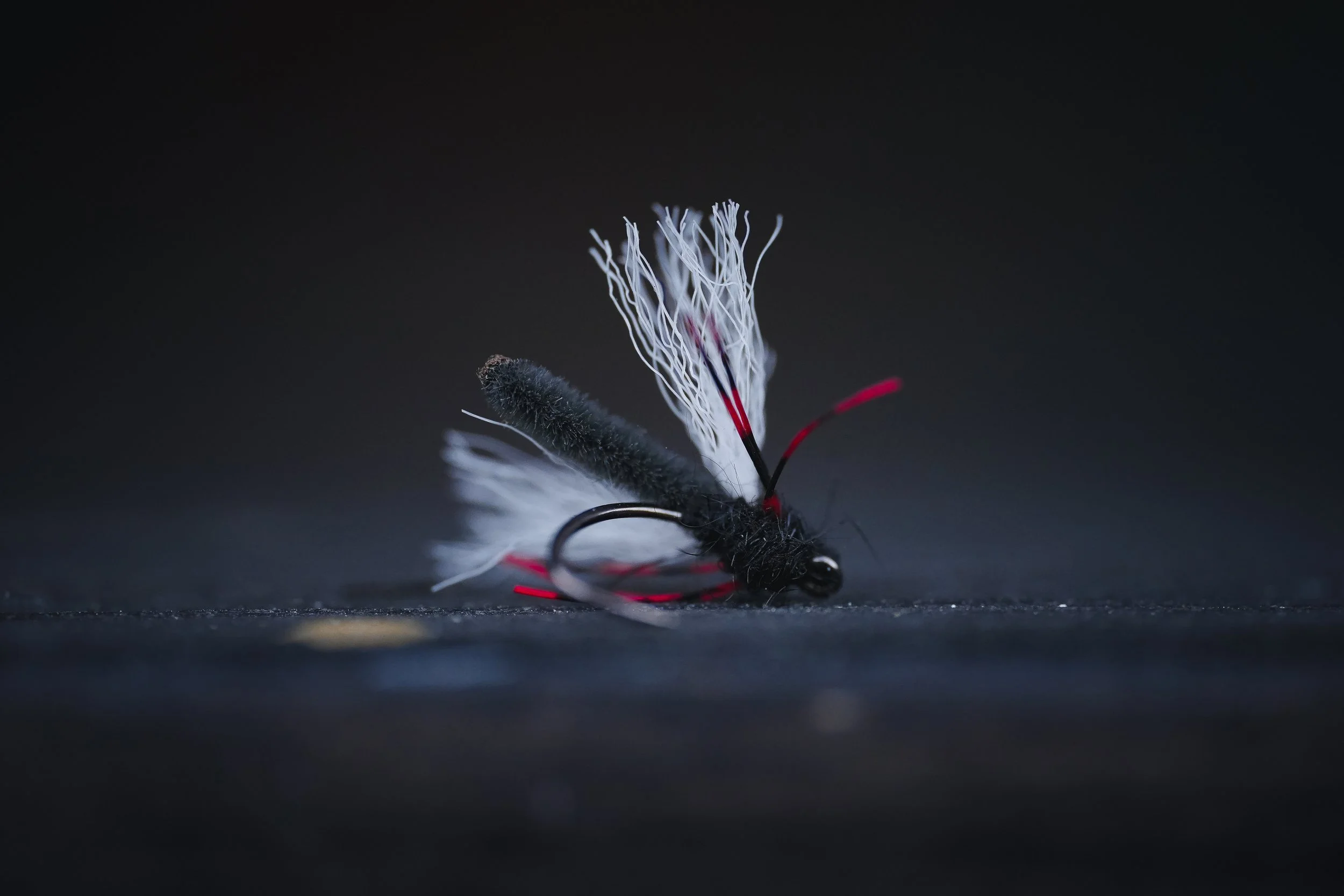
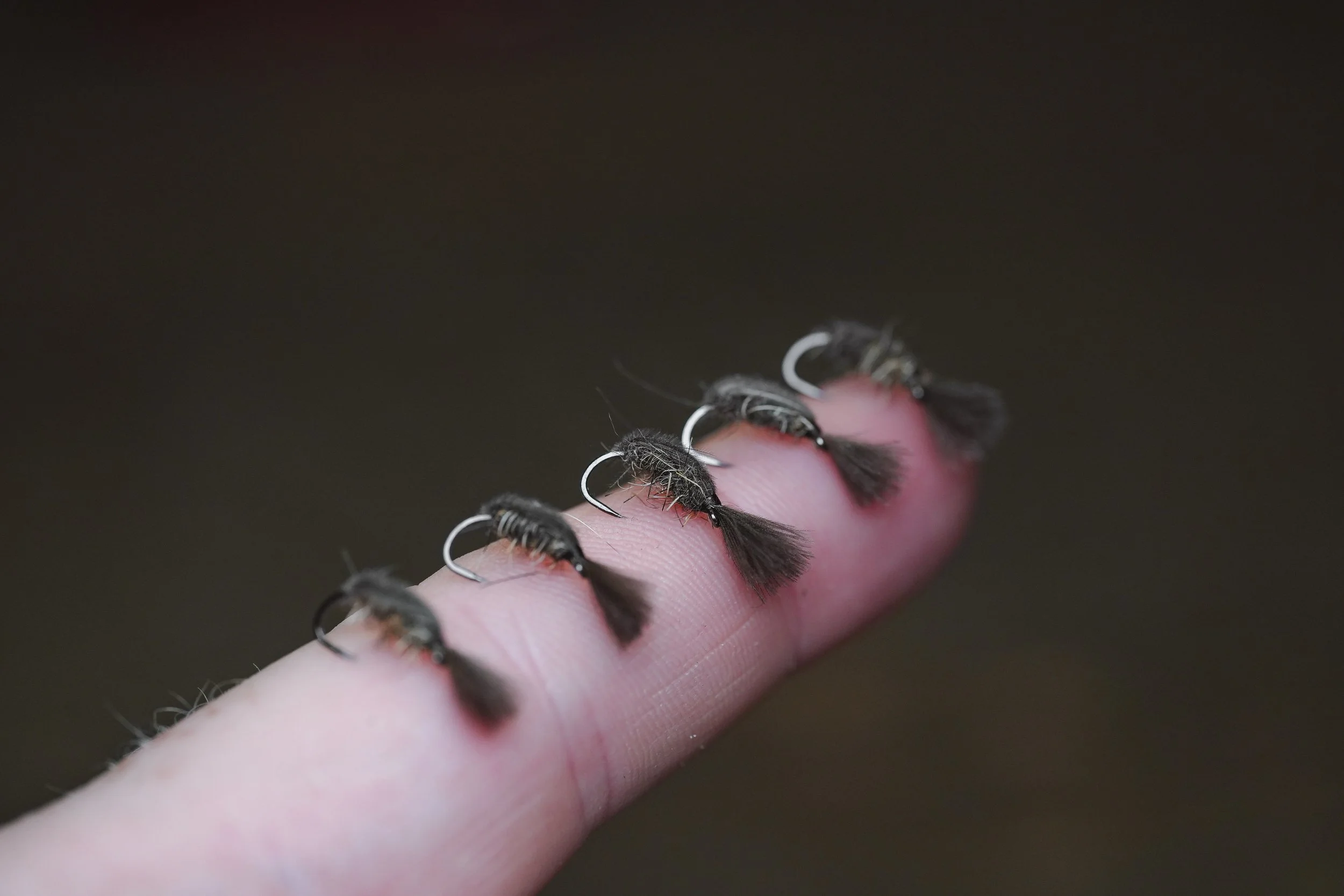
Ant imitation, size 14
Once and Away variant, size 16 and 18
Frubber fly, size 16
Minidaddy, size 14
CDC midge, size 18
IOBO (It Oughta Be Outlawed) by Jack Tucker, size 16 and 18
To explain exactly why I primarily these patterns we need to look at where I mainly fish.
Most of my fishing takes place in lakes and forest ponds. There the most common insects are terrestrial insects, midges, and caddisflies.
All the patterns in that box around my neck (The FlyBag Hero) cover about 98% of my fishing trips in the woods.
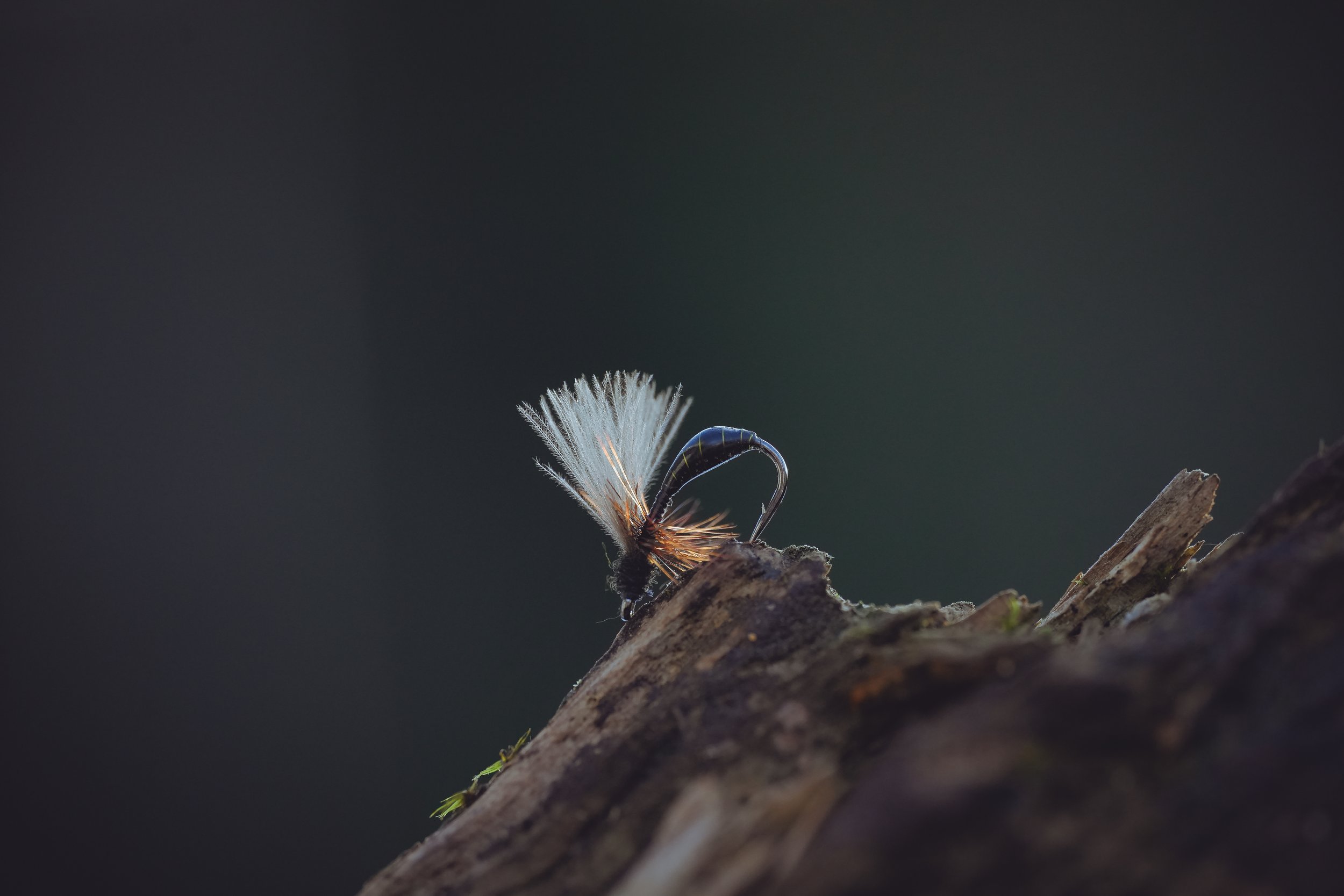
The exceptions are early summer when the mayfly Leptophlebia Vespertina appears—a surprisingly small mayfly around size 16/18 with local variations—and possibly Vulgata.
It can also differ if I happen to stumble upon a hatch of what I believe is our largest caddisfly, Phryganea Grandis.
In addition to this I have the two other boxes, which are usually in my backpack or jacket/pants pocket.
One of them contains only mayfly imitations in all possible stages. This is mainly due to psychological reasons—it helps me maintain peace of mind.
Going to a lake where there is a potential hatch and realizing you forgot the flies at home gives me anxiety of unimaginable proportions.
In an intensive care unit, preparedness is so crucial that you only fully understand it when it fails at the moment you need it. I’ve probably brought some of that mindset into this hobby.
For context: last year I landed both my biggest fish and the highest number of fish on the IOBO, so there’s really no need to bring 1500 flies on a fishing trip.
But sometimes the fish take something else that day—and then you need to be prepared.
If you haven’t tried that fly, I strongly recommend it. You may have seen it before under a different name due to aggressive marketing, but IOBO is the original.
9. Presentation and drifts
This is where I usually fail the most and what I find by far the most difficult.
I’m of the opinion that you can almost have anything at the end of the leader if you achieve a perfect drift—even though that’s obviously not true and has been proven wrong time and time again.
A good drift with an imitation of the right insect in the right size, and you’re golden.
I’m sure many people have experienced casting to a fish repeatedly with the “right” fly, and then on drift number ten it finally takes.
Maybe I should have changed flies five casts earlier—but hey, I’m persistent.
I often think the color of dry flies ranks far too high on people’s list of important factors. Personally, I don’t think it should even be on the list.
The title of this section sums up my philosophy:
Present the fly you believe the fish wants in a good way, and achieve the correct drift relative to the insect you’re imitating, and your chances are probably good.
I truly believe a really good presentation of the fly is, and will always be the hardest part in dry fly fishing.
10. Upstream or downstream
Slightly upstream if I can choose, but straight upstream works too. At least that’s what I find easiest.
Alternatively, slightly downstream isn’t bad either if the opportunity is there.
The shape of the river and the fish’s position ultimately determine what I can manage, so I usually go with the option I believe I can execute best.
11. Fighting fish
Hard question because it depends on the situation.
I want to bring the fish to the net quickly, safely and firmly whenever possible, but that’s not always achievabl, especially the quick part.
So the somewhat boring answer is that you simply have to solve the situation as best as possible given the circumstances and let the fish run when that feels right and reel it in when it relaxes or turns. This is somewhat hard to answer because I haven’t hooked into a really big fish yet and almost anyone can reel in a 1kg trout.